Advances in International Investments: Traditional and Alternative Approaches By Hung-Gay Fung, Xiaoqing Eleanor Xu & Jot Yau – Digital Download!
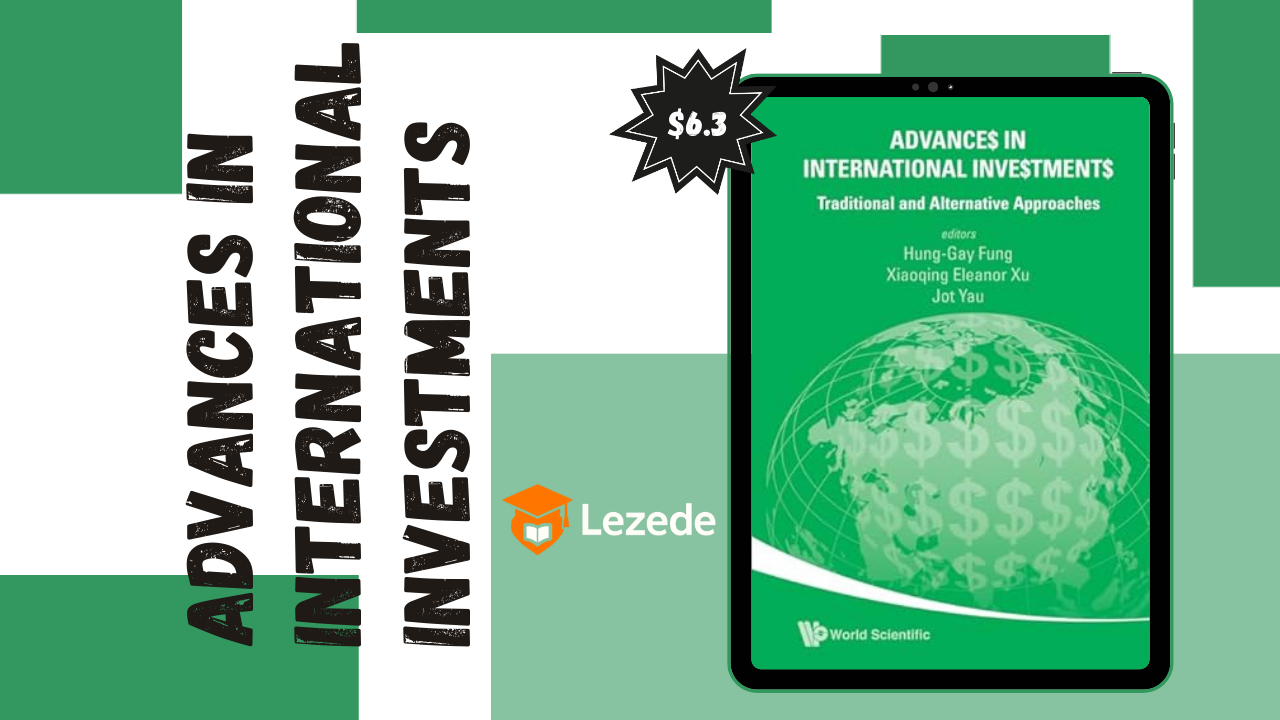
Introduction to Advances in International Investments: Traditional and Alternative Approaches
In a world where capital moves across borders at lightning speed, understanding how to invest internationally is no longer optional—it is essential. The forces of globalization, evolving regulation, technological change, and shifting economic power have created a dynamic landscape for investors. Traditional equity and bond markets are only one piece of the puzzle; alternative assets, derivatives, and new investment vehicles now play a major role in global portfolios.
The course Advances in International Investments: Traditional and Alternative Approaches By Hung-Gay Fung, Xiaoqing Eleanor Xu & Jot Yau is designed to give you a complete, modern view of cross-border investing. Developed by three leading scholars and practitioners, this program combines academic rigor with practical insight to explain how international markets work, how they are evolving, and how you can position yourself or your organization to take advantage of opportunities worldwide.
Whether you are a portfolio manager, an institutional investor, a policy analyst, or a student aiming for a career in global finance, this course equips you with the frameworks, tools, and real-world knowledge needed to succeed.
Why International Investing Matters More Than Ever
Capital allocation across countries is one of the defining features of modern finance. Yet international investing presents a unique set of challenges:
-
Currency Risk and Hedging. Foreign exchange fluctuations can amplify or reduce returns.
-
Political and Regulatory Risk. Government policies, capital controls, and local market rules can impact investments.
-
Accounting and Information Asymmetries. Different standards and disclosures can obscure true value.
-
Cultural and Behavioral Differences. Investor behavior varies across markets, influencing price patterns.
At the same time, international and alternative investments offer important benefits:
-
Diversification. Exposure to multiple economies reduces portfolio risk.
-
Access to Growth. Emerging and frontier markets can deliver returns unavailable in mature markets.
-
New Return Drivers. Alternative assets—private equity, hedge funds, infrastructure, commodities—provide nontraditional sources of performance.
Advances in International Investments tackles both sides of this equation: the opportunities and the risks. It gives you a grounded, evidence-based approach to making cross-border allocation decisions.
Overview of the Course
This course, created by Hung-Gay Fung, Xiaoqing Eleanor Xu, and Jot Yau, is structured to help you build your expertise step by step. Each module covers key concepts in depth and illustrates them with case studies, data, and practical examples. Major themes include:
-
Foundations of International Investing. Historical context, the theory of global diversification, and the evolution of international capital markets.
-
Currency and Exchange Rate Dynamics. How to manage FX risk and evaluate currency-hedged versus unhedged strategies.
-
International Equity and Fixed Income Markets. Key features, performance drivers, and integration trends.
-
Emerging and Frontier Markets. Growth potential, structural challenges, and investment vehicles.
-
Alternative International Investments. Hedge funds, private equity, infrastructure, and other nontraditional assets in a cross-border context.
-
Risk Measurement and Management. Value-at-risk, scenario analysis, and country-specific risk metrics.
-
Institutional and Regulatory Considerations. Tax treaties, fund structures, and compliance issues for global portfolios.
By the end of the program, you will have a comprehensive framework for evaluating both traditional and alternative opportunities across countries.
Key Concepts You’ll Master
This course goes beyond definitions and teaches you how to apply international investment theory to practice. Among the skills and concepts you will develop are:
-
Global Asset Allocation. How to construct portfolios that balance domestic and international exposures.
-
Currency Hedging Strategies. Use of forwards, futures, options, and cross-currency swaps to manage FX risk.
-
Country and Sector Analysis. Evaluating macroeconomic, political, and structural factors in investment decisions.
-
Alternative Asset Integration. Understanding how private equity, infrastructure, commodities, and hedge funds behave across market cycles and regions.
-
Performance Attribution. Breaking down returns into currency, market, and selection effects for global portfolios.
-
Risk-Adjusted Evaluation. Using measures such as Sharpe ratio, information ratio, and downside risk tailored to international assets.
These competencies prepare you to handle real-world tasks in asset management, investment consulting, and policy analysis.
What Makes This Course Unique
While many programs focus on either traditional international investments or alternative assets separately, Advances in International Investments deliberately bridges both worlds. This holistic view reflects how sophisticated investors actually build portfolios today. Distinctive features include:
-
Authored by Recognized Experts. Hung-Gay Fung, Xiaoqing Eleanor Xu, and Jot Yau are respected for their research and teaching on global finance and risk management.
-
Evidence-Based Approach. The course draws on empirical studies, not just anecdotes, to show what works and what doesn’t in international investing.
-
Practical Tools. You will learn not only concepts but also models, formulas, and data sources used by professionals.
-
Contemporary Topics. Coverage of ESG (environmental, social, governance) factors, sovereign wealth funds, and the impact of fintech on cross-border investing.
This combination makes the program equally valuable to academics seeking applied perspectives and practitioners looking for structured frameworks.
Benefits of Taking Advances in International Investments
By completing this course, you will be able to:
-
Assess Global Opportunities. Identify attractive markets, sectors, and instruments worldwide.
-
Manage International Risks. Use appropriate hedging, diversification, and governance strategies.
-
Integrate Alternative Assets. Add nontraditional return drivers to global portfolios thoughtfully.
-
Enhance Client or Institutional Outcomes. Communicate global investment ideas clearly to stakeholders.
-
Stay Current. Understand how technology, regulation, and shifting economic power are reshaping cross-border investing.
These benefits translate into a stronger skill set, improved investment decisions, and greater professional credibility.
Who Should Enroll in This Course
This program is ideal for:
-
Portfolio Managers and Analysts seeking to improve their global asset allocation and risk management skills.
-
Institutional Investors and Consultants who advise on or oversee cross-border investments.
-
Policy Makers and Regulators wanting insight into how international capital flows affect domestic markets.
-
Students and Career Changers aiming for roles in asset management, investment banking, or sovereign wealth funds.
No advanced math background is required, though familiarity with basic investment principles will help you maximize the course.
How to Get the Most Out of the Program
To fully benefit from Advances in International Investments:
-
Engage with the Case Studies. Apply each module’s concepts to real countries, sectors, or asset classes.
-
Use Available Data Sets. Practice analyzing exchange rates, index returns, and alternative asset performance.
-
Compare Theory and Practice. Test the models you learn against current market events.
-
Think Globally and Locally. Consider how your own market or organization fits into the international landscape.
This active approach helps transform knowledge into actionable expertise.
Broader Impact on Your Career
Mastering international investments gives you a competitive edge. As portfolios become more globally diversified and alternative assets more mainstream, professionals who can integrate both are increasingly valuable. The frameworks you learn here—asset allocation, risk assessment, currency management, performance attribution—are transferable to many roles in finance, from portfolio management to consulting to regulatory analysis.
Graduates of the course report greater confidence in evaluating global funds, presenting ideas to investment committees, and discussing risk with clients or colleagues. In a world where cross-border capital flows shape everything from interest rates to corporate strategy, this knowledge is indispensable.
Conclusion
Advances in International Investments: Traditional and Alternative Approaches By Hung-Gay Fung, Xiaoqing Eleanor Xu & Jot Yau is more than a survey of global markets. It is a comprehensive, practical guide to navigating the complex world of cross-border investing. By integrating traditional and alternative approaches, the course prepares you to seize opportunities, manage risks, and contribute meaningfully to global portfolio decisions.
If you’re ready to move beyond domestic markets and gain a sophisticated understanding of international and alternative investments, this program offers the roadmap. Under the guidance of three renowned experts, you’ll develop the skills and confidence to operate effectively in the interconnected world of modern finance.