Free Download the Market Profile By Chicago Board of Trade – Includes Verified Content:

What is Market Profile? Understanding the Method Behind the Market
Discover the Intra-Day Trading Technique That Changed How We Analyze Market Value
In the world of trading, understanding market structure and value development is critical for making smarter, more confident decisions. One of the most effective frameworks for doing so is the Market Profile®, a powerful charting technique developed by J. Peter Steidlmayer, a trader at the Chicago Board of Trade (CBOT) during 1959–1985.
Market Profile was introduced to help traders visualize market behavior in real-time, combining both price and time to create a dynamic picture of value formation throughout the trading day.
🧠 What Is Market Profile?
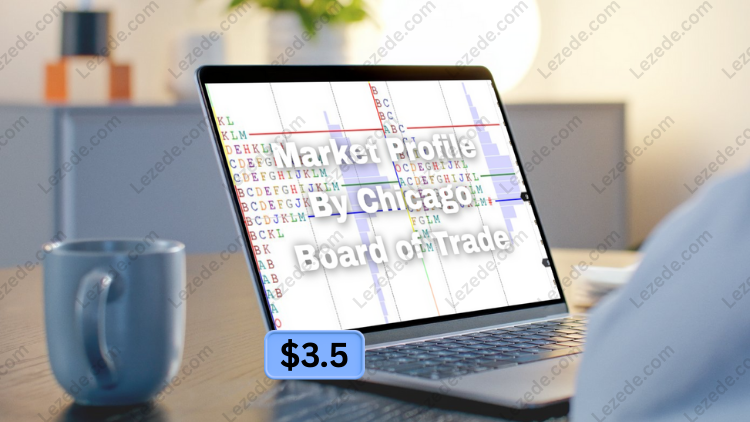
Market Profile® is an intra-day charting method that displays price on the vertical axis and time or activity on the horizontal axis. The resulting chart typically takes the shape of a bell curve, with most market activity clustering around a central “value” area.
This method provides traders with a statistical view of the market—showing where the market is spending most of its time and where buyers and sellers are in agreement or conflict.
✅ Core Elements of Market Profile:
-
TPOs (Time-Price Opportunities): Each letter or block on the chart represents a time period when a price level was traded.
-
POC (Point of Control): The price level with the highest amount of activity.
-
Value Area: The range that encompasses ~70% of trading activity around the POC.
-
Initial Balance: The first hour’s price range, serving as the foundation for analyzing the rest of the session.
📈 Origin of the Market Profile
In 1985, CBOT introduced the CBOT Market Profile (CBOTMP1) as part of a broader trading product. It included access to the Liquidity Data Bank (LDB), a database of end-of-day clearings that identified trading volume by participant type—locals, commercials, brokers for members, and brokers for the public.
The goal was simple: provide traders with a visual tool to evaluate market value as it evolves, and use trader-type data to interpret market condition and improve performance.
By 1991, a second version (CBOTMP2) was released, placing more emphasis on the Market Profile chart itself and less on the LDB data, aligning with the rise of electronic trading and real-time tick data.
🔍 How Market Profile Works
Market Profile is based on the idea that markets operate around a perceived fair value, constantly moving between equilibrium and imbalance. By viewing the distribution of price over time, traders can identify:
-
Areas of support and resistance
-
Likely zones for breakouts or reversals
-
Periods of trend vs. consolidation
-
Intraday “day types” such as trend day, neutral day, or non-trend day
A trader can assess whether the market is accepting or rejecting certain price levels, giving them valuable insight into who is active and what direction the market may favor.
🏫 Market Profile in Academia and Beyond
In 1987, Professor Thomas Drinka of Western Illinois University launched the first Market Profile course in academia. As of 2010, Western Illinois remains the only university offering Market Profile as part of its curriculum, underscoring its continued relevance and impact.
Steidlmayer himself continued to promote the methodology through his Market Logic School, and in publications such as Mind Over Markets, where the Profile is described as “the market’s price activity recorded in relation to time in a statistical bell curve.”
📊 Market Profile vs. Volume Profile
While Market Profile uses TPOs (time-price opportunities) to build its structure, many modern traders use Volume Profile, which shows the actual volume traded at each price level. While both methods aim to highlight value and activity, Market Profile adds a time-based layer of context, giving a more nuanced view of intraday market behavior.
⚙️ Tools & Terminology:
-
TPO (Time-Price Opportunity): A marker showing the occurrence of a price level during a specific time period (e.g., “A” for 08:00–08:29, “B” for 08:30–08:59, etc.).
-
POC (Point of Control): The price level with the most TPOs or traded volume.
-
Value Area: Typically one standard deviation (~70%) above and below the POC.
-
Initial Balance: First hour’s trading range—used to predict breakout zones.
-
Day Types: Trend Day, Neutral Day, Non-Trend Day, etc., which help forecast market behavior based on the profile shape and distribution.
💡 Why Use Market Profile?
Market Profile equips traders with context, allowing them to:
-
See where value is being accepted or rejected
-
Distinguish high probability setups in real-time
-
Improve risk management by targeting key price levels
-
Trade in line with market logic, not just price action
🔚 Final Thoughts
More than just a charting tool, Market Profile is a framework for understanding market behavior. It’s been used by professional traders since the 1980s and remains essential for anyone looking to decode price action with structure, logic, and statistical insight.
Whether you’re a scalper, swing trader, or position trader, learning Market Profile can transform how you view and interact with the market.