Free Download Psychology of the Stock Market (1912) by G.C.Selden – Includes Verified Content:

Psychology of the Stock Market (1912) by G.C. Selden: Timeless Lessons in Investor Behavior
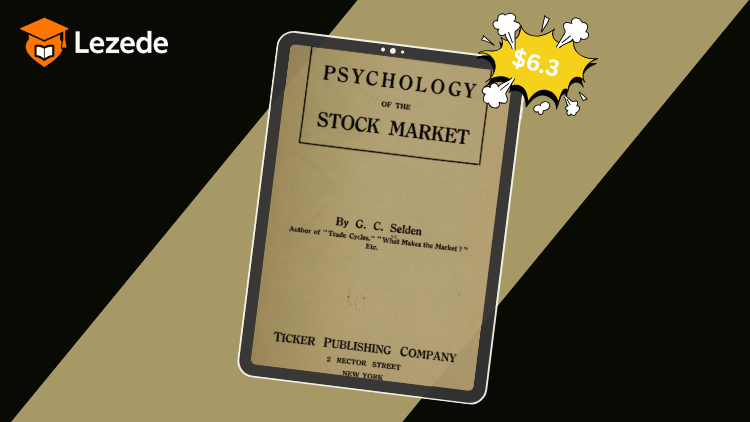
Psychology of the Stock Market (1912) by G.C. Selden is a landmark book that explores how human emotions shape the behavior of financial markets. More than a century later, Selden’s insights remain deeply relevant to both new and experienced investors. In this article, we’ll explore the book’s core themes, how emotions like fear and greed drive market cycles, and why Selden’s psychological perspective still holds immense value in today’s volatile financial environment.
Overview of Selden’s Revolutionary Approach
Published in 1912, Psychology of the Stock Market stands apart from traditional investing guides by focusing not on technical indicators or economic data—but on the emotional drivers behind market behavior. Selden boldly claimed that the stock market is not just a reflection of financial reality, but a mirror of mass psychology.
He argued that markets rise and fall primarily due to emotions such as optimism, fear, hope, and panic. This was revolutionary at the time, predating the field now known as behavioral finance. Instead of only analyzing fundamentals, Selden encouraged investors to pay close attention to investor sentiment and crowd behavior.
Emotions: The Real Engine Behind Market Movements
One of Selden’s central arguments is that stock price movements are driven by emotions—not logic. He observed that emotional waves can inflate prices during periods of euphoria and deflate them during panic, regardless of the real economic backdrop.
For example, during bull markets, optimism and greed push investors to bid prices beyond reasonable valuations. Conversely, in bear markets, fear and pessimism spark massive sell-offs, often at a loss. This emotional cycle creates feedback loops that become self-reinforcing, leading to exaggerated price swings.
The Speculative Cycle: A Repeating Pattern of Investor Psychology
Selden introduced the concept of the speculative cycle, a series of predictable phases based on crowd behavior:
-
Initial Price Increases: Modest gains attract a small number of savvy investors.
-
Rapid Price Rise: Momentum builds as more traders jump in.
-
Euphoric Buying: FOMO (fear of missing out) takes over, inflating prices to unsustainable levels.
-
Panic Selling: When reality hits, panic ensues and prices plummet.
-
Market Decline: A correction phase wipes out most gains.
-
Recovery Phase: Stabilization begins, setting the stage for the next cycle.
By understanding this pattern, modern investors can learn to anticipate market phases and avoid being swept up in mass hysteria.
Mental Attitudes That Sabotage Investor Success
Selden also categorized several destructive mental attitudes that lead to poor decision-making:
-
Over-Optimism: Blind belief in rising prices often leads to overexposure.
-
Excitement: Emotional highs encourage excessive risk-taking.
-
Stubbornness: Refusal to adapt strategies results in holding onto losing positions.
-
Acting on Hunches: Investing based on feelings rather than facts leads to costly errors.
He emphasized the importance of cultivating emotional self-awareness and using logic to counterbalance psychological biases.
Investment Strategies Informed by Psychology
Selden’s work encourages investors to align their strategies with the emotional stages of the market:
-
During euphoric phases: Be cautious and avoid overpaying.
-
During panic: Look for undervalued opportunities.
-
Stay emotionally balanced: Use predefined strategies and goals to avoid emotional decisions.
Practices like diversification, goal setting, and independent thinking are key tools to help resist market hysteria.
The Value of History—But Not Blindly
Selden warns investors not to rely too heavily on past trends. While historical data reveals useful patterns, each market is unique, shaped by new technologies, regulations, and global events.
Instead, he proposes a hybrid approach:
-
Study historical cycles for reference.
-
Adapt to modern contexts with real-time analysis.
-
Stay flexible and open to change.
This mindset helps investors avoid getting stuck in outdated models and prepares them to respond effectively to today’s market conditions.
Why Selden’s Work Still Matters Today
Despite being written in 1912, Selden’s insights remain incredibly relevant:
-
Behavioral finance, now a respected academic discipline, builds directly on his ideas.
-
Models based on investor sentiment are commonly used by hedge funds and financial analysts.
-
His emphasis on emotional regulation is essential in today’s high-speed, high-stress markets.
From the Great Depression to the dot-com bubble and even Bitcoin’s wild volatility, Selden’s framework has proven accurate time and again.
Conclusion: A Must-Read for the Emotionally Intelligent Investor
Psychology of the Stock Market (1912) by G.C. Selden remains a cornerstone of investor education. By exposing the hidden forces of emotion behind market activity, Selden offers timeless lessons in how to invest with clarity, patience, and discipline.
In an era of algorithmic trading and constant news cycles, mastering the human element of investing is more critical than ever. Selden’s work reminds us that behind every chart, ticker, and market trend lies the greatest variable of all: the investor’s mind.