Free Download Corruption and Reform: Lessons from America’s Economic History By Edward Glaeser & Claudia Goldin – Includes Verified Content:

Corruption and Reform: Lessons from America’s Economic History By Edward Glaeser & Claudia Goldin – Overview
Introduction to the Book
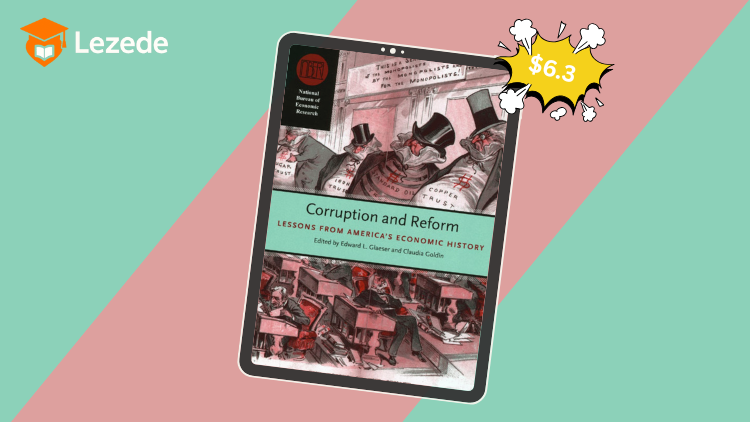
Corruption and Reform: Lessons from America’s Economic History by Edward L. Glaeser and Claudia Goldin offers a deep exploration of America’s journey from rampant 19th-century fraud to becoming one of the least corrupt nations in the world. Through historical analysis and case studies, the book sheds light on the forces, policies, and societal changes that curbed corruption — offering valuable lessons for fighting it globally today.
America’s Corrupt Past
In the 1800s, U.S. municipal governments and business magnates, or “robber barons,” often engaged in schemes that rival the corruption seen in modern developing nations. Public works projects, financial institutions, and political offices were prime targets for fraud. This period shows how systemic corruption can thrive without strong legal frameworks and oversight.
Key Themes and Lessons
1. The Nature of Systematic Corruption
The book begins by defining and measuring corruption historically, with John Joseph Wallis outlining how graft infiltrated American political and economic systems.
2. Consequences for Business and Society
Contributors like Naomi R. Lamoreaux and Jean-Laurent Rosenthal examine how weak corporate governance left minority shareholders vulnerable, while others study municipal finance and infrastructure abuse.
3. Pathways to Reform
Several reforms stand out, such as:
-
Free Banking in the 1830s, which reduced political influence in bank chartering.
-
The rise of independent newspapers, which exposed wrongdoing and shaped public opinion.
-
Federal oversight during the New Deal, which replaced corrupt local relief systems.
Why This Book Matters Today
Though the case studies focus on the United States, the strategies outlined — from deregulation in specific sectors to empowering investigative journalism — are relevant to anti-corruption efforts worldwide. Policymakers, historians, and economists will find the lessons both practical and inspiring.
Conclusion
Corruption and Reform is not just a history book; it’s a blueprint for understanding how societies can evolve from entrenched corruption to greater transparency and fairness. By studying America’s past, readers can uncover tools for building more accountable institutions today.