A Mathematician Plays The Stock Market By John Allen Paulos – Digital Download!
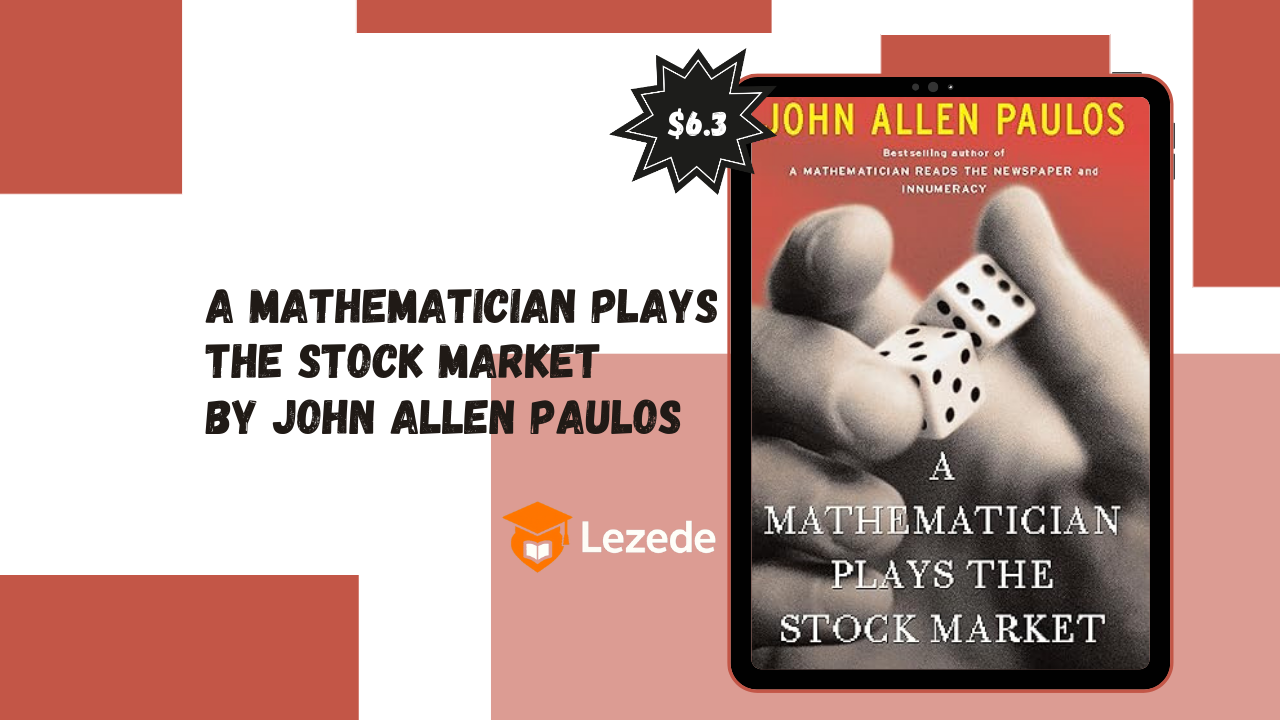
Introduction to A Mathematician Plays the Stock Market by John Allen Paulos
In the constantly shifting world of finance, the stock market often appears to be a blend of logic, psychology, and chance. Many people approach it hoping for quick profits or long-term security, yet very few take a disciplined, analytical approach to understand the numbers, patterns, and probabilities that underpin every trade. John Allen Paulos, an acclaimed mathematician and bestselling author, bridges this gap in his insightful work A Mathematician Plays the Stock Market. Rather than presenting yet another “get-rich-quick” system, Paulos takes readers on a fascinating journey that combines mathematics, behavioral finance, and real-world market experiences. This course or book functions as a gateway for investors, students, and curious minds who want to explore how mathematical thinking can illuminate the mysteries of Wall Street.
Paulos begins with a deeply personal yet relatable story: his own experiences of investing in technology stocks during the dot-com bubble. As he candidly recounts his successes and mistakes, he shows how even someone trained in advanced mathematics can succumb to market hype, cognitive biases, and misplaced optimism. This honest perspective instantly humanizes the author, making the material approachable for readers of all backgrounds. Instead of claiming to have mastered the market, Paulos admits to the uncertainty and randomness that pervade financial systems—while also demonstrating how mathematical tools can help investors navigate that uncertainty more intelligently.
What makes A Mathematician Plays the Stock Market stand out is its seamless integration of mathematical concepts into everyday investing scenarios. Paulos explains probability, statistics, game theory, and fractals in a way that is accessible, even to those who might shy away from numbers. For example, he illustrates how the “random walk” theory describes the unpredictable movement of stock prices, why correlation does not equal causation, and how small changes in variables can create disproportionately large outcomes. Readers begin to see the stock market not as a casino but as a complex system with underlying structures—structures that can be better understood through mathematical reasoning.
Beyond equations and models, Paulos dives into the psychology of investing. He shows how cognitive biases—such as overconfidence, herd mentality, and the gambler’s fallacy—affect decision-making in financial markets. By blending mathematics with behavioral finance, he provides a holistic picture of why individuals and institutions often act irrationally, even when the data clearly suggest a different course of action. This balanced perspective allows readers to recognize their own biases and develop strategies to counteract them.
Another key feature of the book/course is its emphasis on risk and uncertainty. Paulos clarifies concepts such as expected value, variance, and diversification, helping readers understand how to evaluate potential returns in light of possible losses. He demystifies complex financial instruments and trading strategies, showing where mathematical models succeed and where they fail—especially in times of market turbulence. Through clear explanations and memorable anecdotes, he encourages readers to think critically rather than follow fads or untested theories.
For anyone involved in investing—whether as a professional, a hobbyist, or a beginner—the lessons from A Mathematician Plays the Stock Market are invaluable. Instead of promising foolproof profits, Paulos equips readers with the mindset and tools needed to approach the market with humility, curiosity, and rigor. This is particularly relevant in today’s environment, where algorithmic trading, big data, and behavioral nudges shape financial outcomes more than ever before. Understanding the interplay between mathematics and market behavior can give investors an edge—not by predicting the future perfectly, but by making smarter, probability-based decisions over time.
In addition to its educational value, the book is highly readable. Paulos’s witty, conversational style makes complex topics engaging. He uses humor, real-world examples, and pop-culture references to explain concepts like efficient markets, arbitrage, and chaos theory. Readers are not overwhelmed with formulas but guided step by step through ideas that can transform how they view risk and reward. This accessibility ensures that both seasoned investors and newcomers can find practical takeaways.
Moreover, A Mathematician Plays the Stock Market encourages critical thinking about the broader financial system. Paulos highlights how market bubbles form, why crashes occur, and how collective behavior amplifies volatility. He also reflects on the ethical dimensions of investing, touching on issues such as insider trading, information asymmetry, and the societal impact of speculation. By placing mathematics within a real-world, ethical framework, the book/course goes beyond technical knowledge to foster a deeper understanding of finance as a human activity shaped by incentives, beliefs, and structures.
Another compelling aspect is the author’s exploration of paradoxes and surprises in the market. For instance, Paulos discusses why certain strategies that seem mathematically sound can still lead to losses, and how rare events (“black swans”) can undermine even the most sophisticated models. These insights are especially important for anyone building a long-term investment plan, as they highlight the necessity of resilience, diversification, and skepticism toward overly precise predictions.
The course or book also acts as a bridge between academic theory and practical investing. While many finance texts remain abstract, Paulos grounds his analysis in personal experience and real-life case studies. This makes it easier for readers to apply concepts to their own portfolios, whether they are trading individual stocks, managing retirement accounts, or simply trying to understand market news with greater clarity.
Ultimately, A Mathematician Plays the Stock Market is not just about numbers; it’s about developing a disciplined way of thinking. Mathematics provides the framework, but Paulos’s ultimate goal is to cultivate intellectual honesty, patience, and probabilistic reasoning—traits that can benefit not only investors but anyone facing uncertainty in life. The stock market, in his view, is a microcosm of decision-making under risk, making it an ideal setting to explore these timeless skills.
For learners approaching this course or book, several benefits stand out:
-
A fresh perspective on investing: Rather than following tips or trends, you’ll learn to evaluate opportunities through mathematical reasoning and evidence.
-
Improved risk assessment: Understand how to measure and manage uncertainty, a crucial skill for any investor.
-
Recognition of psychological traps: Discover how biases affect decision-making and how to counter them.
-
Accessible explanations of complex ideas: Gain clarity on topics such as randomness, efficient markets, and statistical thinking without needing an advanced math background.
-
Ethical and systemic awareness: Explore how individual actions interact with larger market dynamics.
By the end of this intellectual journey, readers will not necessarily emerge as market wizards, but they will have gained a powerful toolkit for thinking critically about financial decisions. They will be better prepared to ask the right questions, analyze data responsibly, and maintain perspective in the face of inevitable market fluctuations.
In short, A Mathematician Plays the Stock Market by John Allen Paulos offers a unique, multidimensional approach to understanding one of the most important arenas of modern life. Whether you are an aspiring investor, a student of finance, or simply curious about how mathematics applies to everyday challenges, this work invites you to see the stock market through a clearer, more informed lens. It blends storytelling, analysis, and self-reflection to deliver insights that extend far beyond trading.
If you are ready to deepen your understanding of investing, sharpen your reasoning skills, and approach the market with both curiosity and caution, this course/book is an excellent place to start. It transforms what might seem like an opaque, intimidating world into a rich landscape of ideas, probabilities, and human behavior—a place where mathematics doesn’t just crunch numbers but illuminates the patterns of risk and opportunity.