Free Download Contrarian Investment Strategies: The Next Generation By David Dreman
Check content proof, now:

David Dreman – The Pioneer of Contrarian Investing
David Dreman is nearly synonymous with contrarian investing, a strategy he has successfully championed for decades. His distinct investment approach has consistently delivered results, inspiring many would-be imitators—though few can match his track record. His Kemper-Dreman High Return Fund, launched in 1988, has remained a top performer, ranking as the leading equity-income fund out of 208 funds assessed by Lipper Analytical Services, Inc.. Dreman is also among a select group of fund managers whose clients have outpaced the broader market over 5-, 10-, and 15-year periods.
As the longest bull market in stock market history draws to a close, volatility and investor uncertainty are surging. It is precisely this environment that tests the skill of professionals and fuels anxiety among average investors. Yet, it also sets the stage for David Dreman’s powerful contrarian strategies, designed for success in the face of shifting market tides.
Contrarian Investment Strategies: The Next Generation
In Contrarian Investment Strategies: The Next Generation, Dreman provides readers with a roadmap for outperforming even the most seasoned portfolio managers—and for thriving during the inevitable Wall Street panics. His guidance is delivered in the same signature tone The New York Times praised as “witty and clear as a silver bell.”
Dreman outlines a proven and methodical approach to market outperformance: buying strong companies that are temporarily out of favor. At the heart of his strategy is a powerful psychological observation—investors tend to overreact. He shows that the market frequently overprices the “most popular” stocks while undervaluing the “least loved” ones. Moreover, he explains how earnings surprises and other market shocks affect each category of stock in opposite ways—and how these events can be used to your advantage.
Key Lessons and Insights from Dreman’s Strategy
-
Why contrarian stocks often outperform in both bear markets and during bullish upswings
-
Why high-dividend yields matter for aggressive investors just as much as conservative ones
-
Why so-called “safe” investments like Treasury bills and government bonds can be more dangerous than they appear—especially in inflated markets
-
Why IPOs are often a guaranteed losing bet
-
Why investors should be extremely cautious about Nasdaq, despite its hype as the market of the future
-
Why moments of panic and crisis can be prime opportunities for contrarian investors
-
Why the odds of success from Wall Street’s most “trusted” research are worse than winning the lottery
Editorial Reviews
Amazon.com Review
All stock-market investors embrace the motto “Buy low, sell high.” Few act accordingly, however, for to do so would require that we go against the crowd, buying stocks that are out of favor and selling Wall Street’s darlings. Powerful psychological forces prevent us from pursuing a contrarian investment strategy, although it consistently beats the market, according to David Dreman, a seasoned money manager and long-time columnist for Forbes magazine.
One of the Street’s best-known and most articulate contrarians, Dreman has updated his 1982 investment classic, Contrarian Investment Strategies, using recent research on investor psychology. His revised book combines proven techniques for selecting undervalued stocks with fresh insights on how to defy, and thereby profit from, the popular fears or enthusiasms of the moment.Dreman pays only cursory attention to a company’s business fundamentals in deciding whether to invest in it. Instead he looks for stocks trading at below-market multiples of per-share earnings, cash flow, book value, or dividend yield.
Historically, Dreman claims, stocks that are cheap by any of these measures have tended to outperform the market average, although this is disputed by those who believe the stock market is efficient and therefore impossible to beat except by accident. Dreman devotes many pages to debunking their research. He offers a new refinement of his low-price strategy, which involves picking the cheapest stocks within industries, to create a diversified, contrarian portfolio.
Contrarian Investment Strategies: The Next Generation is full of practical and provocative advice, but some of its most interesting passages delve into the abstruse findings of cognitive psychology. This research has proven that we are woefully inadequate as intuitive statisticians. Interpreting data to make predictions about the probability of future events, we consistently make the same mistakes. For example, we exaggerate the likelihood that current trends will continue, even when they are historically exceptional. (Logic dictates that trends are more likely to regress toward the mean.)
This fallacy explains why most Wall Street insiders were gloomiest about stocks in 1981, after six years of falling prices, just before the beginning of the greatest bull market ever. Is today’s widespread optimism among investors a reason for caution? Dreman thinks so.
It seems our brains are hard-wired to underperform the market. That’s why few investors can keep to a contrarian approach. Dreman recommends buying stocks when prices fall, the worse the panic the better. But that requires overriding powerful instincts.
Besides reflecting Dreman’s wide reading in finance, psychology, and history, his book also displays his sometimes windy and self-important writing style. At 464 pages, the book is not a quick read. But its intellectual depth and thoroughly tested advice make many other investment books look paltry and superficial by comparison. Serious, independent investors will find it rewarding. –Barry Mitzman
From Library Journal
According to the Library Journal, Dreman, who is also the chair and CEO of Dreman Value Management and the manager of the Kemper-Dreman High Return Fund, examines contrarian investment strategies for the 1990s and the twenty-first century. He defines contrarian investing as buying and selling securities by defying the market and the opinions of other investors. Investor psychology is crucial, and he refers to it as “the necessary link required to activate the contrarian strategies we will now examine.” According to Dreman, investors who overreact to events do so in a predictable way: they “consistently overvalue the prospects of `best’ investments and undervalue those of the `worst.'”
In his presentation and discussion of 41 contrarian investment rules, he covers topics like volatility, analyst projections, stock performance, and financial and political crises. The particular case studies examining the impact of significant events like the Gulf War and the 1987 stock market “crash” on the securities markets are particularly fascinating. Strongly advised for university and public libraries’ business collections. St. John’s University Library, Jamaica, Lucy T. Heckman, Copyright 1998 Reed Business Information, Inc.
Examine
Marshall Loeb, former editor of Fortune magazine and editor of the Columbia Journalism Review One of the rare, original works that comes out every generation or so is written by David Dreman. Strong, insightful, and extensively documented, it offers whole new approaches to investing in the 1990s and beyond.
Bottom Line/Personal, edited by Martin Edelston Although many people identify as contrarians, David Dreman is the real deal. His clever tactics put you well ahead of the curve. Anyone who wants to beat the market will find this new classic to be easy to read and beneficial.
Forbes magazine’s editor, James W. Michaels David Dreman demonstrates how to use psychology to your advantage rather than against you, both for you and the market.
Lipper Analytical Services, Inc., A. Michael Lipper. Good investment writers and money managers are comparatively rare. Both are true of David Dreman. Dreman’s emphasis on comprehending “risk” in Contrarian Investment Strategies: The Next Generation ought to liberate investors from the quantitative pitfalls of so-called risk quantification. Dreman puts it simply: The true risk lies in investments that don’t live up to your expectations and needs. For both novice and expert investors, this book is excellent.
Sandra Ward Barron’s regularly outperforms the S&P 500. A fantasy about mutual funds? Maybe a dream. Indeed, in a sense, Dreman is it—Dreman Value Advisors chairman David Dreman and his Kemper-Dreman High Return fund are performing as promised. Even better, the greatest is probably still to come.
From the Publisher
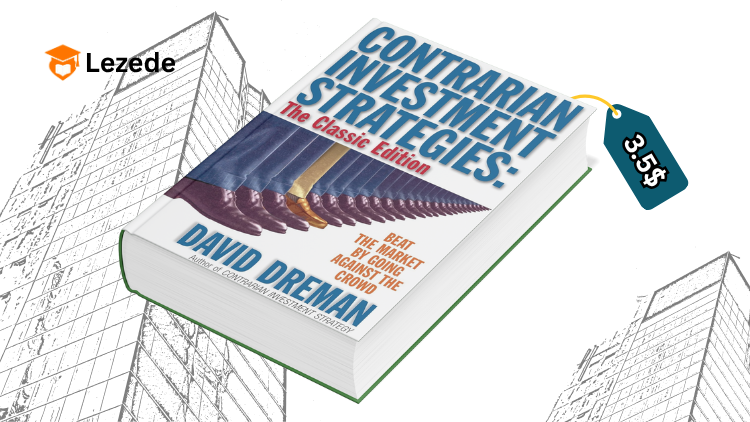
Praise for Contrarian Investment Strategies: The Next Generation
“A generation’s worth of academic theory has leaned on two major assumptions: markets are entirely efficient and investors act rationally. But longtime readers of David Dreman’s classic Contrarian Investment Strategy have known better. Both ideas are flawed. Markets often misprice securities, and investors are largely driven by emotion rather than logic. Contrarian Investment Strategies: The Next Generation confronts the realities of today’s market rather than sticking to tidy but unrealistic models. Dreman’s insights frequently defy conventional thinking… Forget the ivory tower—just read Dreman.”
— Don Phillips, President and CEO, Morningstar, Inc., April 20, 1998
“David Dreman has crafted one of those rare, truly original investment books that only comes along once every generation. Thorough, insightful, and exceptionally well-researched, this book offers an entirely fresh perspective for investing in the 1990s and beyond.”
— Marshall Loeb, Former Editor, Fortune and Money magazines, February 1998
“Many people claim to be contrarians. Dreman truly is. This foundational work pushes far past traditional thinking, presenting bold new ways to grow wealth for investors of all stripes. It’s a must-read—brilliant, sharp, and highly engaging.”
— Martin Edelston, Editor, Boardroom Reports and Bottom Line, March 1998
“Contrarian investing is a popular label, but few have genuinely earned it. David Dreman is one of the rare few. His pointed critiques of market rationality, including efficient market and modern portfolio theories, are especially compelling. Dreman proves that independent analysis trumps widely accepted market doctrines.”
— John Waggoner, USA Today, December 21, 1998
“There are few investment experts who can also write well. David Dreman is both. In this latest work, he reframes the discussion of risk, moving beyond technical measures to define real-world underperformance. This is a crucial read for both amateurs and professionals.”
— A. Michael Lipper, President, Lipper Analytical Services, February 10, 1998
“Dreman’s writing will resonate with students of both history and investor behavior… Above all, this book offers sensible, experience-driven guidance from someone who’s been deeply immersed in the markets for decades.”
— Adam Lashinsky, Chicago Tribune, May 25, 1998
“When David Dreman visited to discuss his new book, I was just as excited to listen to him as I was two decades ago after reading Psychology and the Stock Market. He remains the master of valuation. For a grounded approach to investing, pick up this book.”
— Scott Burns, Dallas Morning News, May 26, 1998
“A frequent question in investing circles is which books belong in a must-read library… Dreman’s Contrarian Investment Strategies: The Next Generation is always on that list. It’s thought-provoking, insightful, and grounded in psychology—offering a value-driven edge when others falter.”
— Eric T. Miller, Chief Investment Officer, Donaldson, Lufkin & Jenrette, from Portfolio Manager’s Weekly, May 6 and May 13, 1998
“This book is a treasure trove of valuable research findings. In his dedication to giving back to the field, Dreman sets a strong example. It’s clear that this book is a passion project—rich in data and determined to separate fact from emotion.”
— Martin Fridson, Financial Analysts Journal, Nov/Dec 1998
“I’ve only just started reading Contrarian Investment Strategies: The Next Generation, but I’m already compelled to recommend it. Canadian-born Dreman is a seasoned market-beater and an independent thinker with strong psychological insights.”
— Patrick Bloomfield, The Financial Post, May 6 & May 16, 1998
“Buying unpopular stocks often requires overcoming deep mental hurdles. For motivation, nothing beats Dreman’s latest work. His funds have an outstanding record, and his principles are highly adaptable to any market.”
— Edmond Jackson, The Sunday Telegraph, January 31, 1999
“This book is packed with solid, no-nonsense advice for the everyday investor. Dreman’s skepticism toward trends—like market timing, small caps, and complex risk metrics—is refreshing. He says what many think but few dare to write.”
— Cliff Pletschet, Oakland Tribune, July 12, 1998
“Dreman’s book is an intelligent, historically grounded analysis designed for both casual investors and institutional pros. It builds on three decades of studying market behavior and shares ideas with practical relevance.”
— John T. Ward, Newark Star-Ledger, August 31, 1998
“Dreman’s books consistently deliver… Contrarian Investment Strategies is no exception—it’s packed with timeless wisdom.”
— Eric Hanson, President, Hanson Investment Management Inc., The Hanson Newsletter, June 1998
“Dreman is frequently called the dean of contrarian investing—and for good reason. He’s outperformed the market by going against the crowd, relying on solid psychology and disciplined methods.”
— Michael Liedtke, Contra Costa Times, May 22, 1998
“Finally, here’s an investment book without fluff, filler, or convoluted theory. Dreman backs his arguments with strong research, dismantling flawed investment strategies with the precision of a skeptic debunking myths. It’s informative and incredibly readable.”
— David Goldman, The Laughing Stock Broker.com, June 18, 1998
“This book covers the full spectrum of contrarian investing with clarity and authority. Dreman shows how investors can outperform even professionals—while also warning against the herd mentality that dominates today’s markets.”
— Mary Scott, Research, June 1998
“Dreman explains how to make psychology work in your favor, rather than let it sabotage your results. A must for any serious investor.”
— James W. Michaels, Editor, Forbes Magazine, February 2, 1998
“A great addition to public and academic business collections. Dreman stresses the critical role of investor behavior, which he calls the ‘missing link’ in executing contrarian strategies effectively.”
— Lucy T. Heckman, Library Journal, May 1998
About the Author
David Dreman is regarded as the “dean” of contrarians by many on Wall Street and in the national media. Dreman is the Chairman and Chief Investment Officer of Dreman Value Management, L.L.C., of Red Bank, New Jersey, a firm that pioneered contrarian strategies on the Street and manages over 4 billion dollars of individual and institutional funds. The author of the critically acclaimed Psychology and the Stock Market and Contrarian Investment Strategy, Dreman is also a senior investment columnist at Forbes magazine.
Articles dealing with the success of his methods have appeared in The New York Times, The Wall Street Journal, Fortune, Barron’s, Business Week, Newsweek, and numerous other national publications. He resides with his wife and two children in Aspen, Colorado, and on the family yacht, The Contrarian.
From The Washington Post
Dreman is the king of the contrarians…. With original research, Dreman has come up with some startling results, which he lays out in great detail in his book. I won’t go through all the calculations, but he demonstrates that, when you take inflation and taxes into account over a 15-year horizon, bond returns are actually negative–while those for a diversified stock portfolio are strongly positive…. So get the book, and get the stocks.
Excerpt. © Reprinted by permission. All rights reserved.
Chapter 1
The Sure Thing Almost Nobody Plays
Imagine you are entering a deluxe, well-appointed casino. Off the lavish entry foyer, there are two ample gambling wings, one hued in reds, the other in muted greens. The red wing looks enticing, but if I may insist, let’s first enter the less crowded green rooms to watch the action.
The atmosphere is unhurried, the blackjack tables are sparsely attended, and every player sits behind a mound of green and black chips. You think at first you’ve come to the wrong place. You see the ordinary table limits, the ordinary clothes, the ordinary games. But then how did these ordinary people get such piles of money?
Then it comes to you. They’re all winning. In fact, as you walk around the green wing, you hardly can find a losing player. You know, of course, that the average house take on table games is 5%, but as you count winning and losing hands, you realize these players are getting a better break. They seem to be gaining at a rate of 60% to 40%. You start fresh and take another count. The results are the same.
A pit boss appears at your shoulder.
“Excuse me,” you say, “but can this be right? The odds favor the players?”
“Yes, indeed. The odds in the green room usually run 60 to 40. It’s been that way since we opened.”
“But…most of the players must go away winners.”
“They sure do. At those odds, we calculate that 9,999 out of 10,000 make money. At our high-stakes tables in the back, they do even better, with winners running about 20,000 to 1. It’s a good thing we get so few players, or they’d break the house.”
Somewhat amazed, you thank him and shake your head. There’s no time to lose, you decide, but you’ll need more than the few dollars you have in your pocket. You hatch a plan to gather your life savings, come back to the casino, and win the bundle you’ve been dreaming of.
On your way out, you glance into the red wing. The action level is much, much higher. The room is crowded and fairly roars with excitement. Can it be even better here, you wonder? Curious, you go in. Players bet multiple table positions, wave frantically for change, entreat the gods for luck. You see few green and black chips, fewer winning players. The piles of chips in front of them are dwindling with each hand.
In fact, the odds are worse than normal. Again, you start to count. Although the players continue to excitedly toss in their chips, the odds appear to be maybe 60 to 40 in favor of the house. Once more, your curiosity whetted, you walk over to a pit boss and ask her the odds at these tables.
She tells you what you suspected. They are 60 to 40 in favor of the casino. Warming up to the subject, she chuckles and says, “This room coins gold for the casino, the chances are 9,999 in 10,000 rounds that we wind up winners.” You don’t have to be a genius to see that this is obviously not the place you want to be.
You go home and get your stash. You return to the casino with your fistful of money, excited, eager for action, all the time figuring how you’ll do even better at the game. But then a strange thing happens. You walk into the red wing and start to play.
On Markets and OddsIt sounds like a nice dream that quickly turns into a nightmare. But in the market, it occurs every day. Furthermore, the odds in the red and green rooms are more than just eye-catching. They’re real. In reality, with these same odds, certain investments in the market constantly generate profits while others consistently lose money. Similar to the casino, the majority of people seek assets with a high probability of outperforming the market. They prefer investments where hordes of eager participants are risking their funds at odds like those in the red room, even though they have invested a great deal of time and energy into the task.
It isn’t surrealistic, despite its appearance. Investors for generations have foregone certain things in favor of losing ventures. For example, we are all aware that investing in government bonds and Treasury bills is a secure bet. However, as we’ll see in detail in chapter 13, the postwar period has brought about a significant change in the investing environment. Government bonds and Treasury bills, which have been gilt-edged assets for decades, are now guaranteed means to deplete your savings. On the other hand, investments that were once thought to be more speculative, like common stocks, have evolved into excellent tools to safeguard and grow your capital.
Yes, all of the sensible saving techniques we were taught at our fathers’ knees are no longer applicable. There has been a revolution since World War II that is just as ferocious against the established order of investment as the French Revolution was against the European order.
Your savings don’t have to be destroyed in a revolution. Just as the railroad revolution enriched the Vanderbilts and Goulds, the information revolution enriched the Gateses and Jobses, and the Industrial Revolution shifted fortunes from the titled nobility to entrepreneurs, so too can this investment revolution enrich you if you understand what causes the changing structure. The odds were heavily in favor of those who discovered the new route and against those who were forced to follow the same old one in each of these revolutions.
This book discusses market odds and probabilities and how to take advantage of them. Just like in gambling, business, or combat, there are odds of success or failure in the marketplace. The best probability player in modern warfare was Napoleon. He prevailed by moving quickly and focusing his forces on the enemy’s weak places on the battlefield, even though he was frequently outnumbered. Although his methods were brilliant, a significant portion of his military genius came from his understanding of the probabilities in any given circumstance.
For example, instead of throwing his exhausted, disheartened soldiers against the guarded Alpine passes, he gambled on the risky run through Genoese territory during the first Italian war. By keeping his forces together, he was able to beat the numerically superior but divided Austrians. But rather than risk being cut off from his supplies, he made a generous treaty with the Viennese while standing precariously in front of the gates of Vienna.
In order to kill time while traveling to Egypt with his invasion fleet, Napoleon is described as playing cards with his generals and staff. He asked him to speak up after overhearing one of his assistants whispering. Fearing for his life, the assistant stumbled, “I said, General, you are not playing fairly.” Napoleon responded, “That’s true, but I always give the money back at the end of the game.”
Although he had always been fearless in combat, General Murat, who would go on to become one of his renowned Marshals, spoke up with hesitation. “General, if I may be so bold, can I ask a question?” “If you give the money back, why then do you cheat?” Napoleon asked after nodding. In response, Napoleon said, “Because I want to leave nothing to chance.”
“Interesting story,” you may think, “but how does it apply to the marketplace?” Contrary to popular belief, the market is not based solely on luck or chance. It is based on odds and probabilities, just like the battlefield. These exert as much power over markets as they do over any other casino game, including craps, roulette, blackjack, and others. We don’t have to cheat like Napoleon at cards, but maintaining an advantage over the competition is essential to our survival. You may significantly improve your chances in the marketplace, as this book will demonstrate.
What is the basis for market probabilities? Are differential equations, which are crucial to the advancement of physics and are currently widely employed in economics, a novel method of foretelling the future? It’s the best research money can buy, worth millions? No. None of these methods, market forecasting, or any other traditional strategy form the foundation of our probability. Instead, they are ingrained in market investor behavior.
I realize it sounds odd. “Psychology,” some may quip, “is the last place in the world to find any sort of reliable odds.” Nevertheless, it is true. Compared to other current investing strategies, placing a wager on clearly defined trends in investor behavior will yield superior odds, which are substantiated by statistical evidence. In my hypothetical casino, the green wing offers these odds. However, how do you get to them?
This book will attempt to demonstrate that to you. Asking you to believe my counsel or anyone else’s is the last thing I want to do. The market is already overrun with faith healers and systems. None that I am aware of beat the market, as they claim. and the highest price. We will carefully examine the likelihood of which investing strategies are successful and which are not, disregarding the relative popularity of each method.
We’ll start by examining the two strategies that experienced investors strongly support: the efficient market theory and the employment of professional money managers. The former depends on the “edge” that a professional investor may provide you by relying on their expertise, experience, and knowledge to tip the scales in your favor. Given my brief discussion of the new market dynamics, are these professionals aware of them? In this drastically altered scenario, do they win big? Let’s examine the expert record to find out.
Great Expectations
Institutional investors, such as mutual funds, pension funds, bank trust divisions, asset management companies, and insurers, oversee massive sums of capital. By the end of 1997, their total assets had exceeded $14.8 trillion, growing at a rate even faster than the overall economy. They now dominate more than 70% of trading and own around half the equities listed on the New York Stock Exchange. The scale of their transactions is staggering. In 1997 alone, their activity was estimated at $2 trillion in stock trades, generating a massive $10 billion in commissions. These professionals are often regarded as the top tier of the investment world.
These money managers are believed to bring unparalleled expertise to financial markets. Backed by top-tier research and supported by teams of seasoned analysts, they are assumed to hold an edge over individual investors. Many financial commentators have encouraged small investors to hand over their funds to these experts, citing their superior knowledge and access. Some go as far as declaring the individual investor irrelevant in today’s market landscape. But the critical question remains: have these professionals truly transformed the investing world into a golden age?
In short, the answer is no. Most professional fund managers have consistently failed to beat market benchmarks. John Bogle, founder of Vanguard, pointed out that 90% of money managers have lagged the market in every decade since the 1960s. Similarly, Burton Malkiel of Princeton, author of A Random Walk Down Wall Street, found mutual funds underperformed their benchmarks between 1971 and 1991.
Reports from Morningstar and Lipper Analytical Services, which track mutual fund returns, reveal that across six major stock fund categories, the S&P 500 outpaced every group over 3-, 5-, and 10-year spans ending in 1997. Only small-cap funds showed a marginal outperformance over five years. Additional findings from pension consultants studying hundreds or thousands of managers reveal similar results.
So what does this mean for investors? Professionals, according to conventional wisdom, should be rational actors who calmly buy undervalued stocks during downturns and sell during frenzies. They’re supposed to bring stability and intelligence to irrational markets. But data tells a different story.
The SEC has documented that individual investors often behaved more prudently than institutions. For example, individuals sold before the 1968 market peak and bought near the lows of 1970 and 1974. Conversely, institutional investors tended to buy near the peaks and panic-sell at the troughs. During the 1987 market crash, individuals were hardly active. SEC records indicate that nearly all the panic-selling came from institutional players. A similar trend appeared in the third quarter of 1990 after Iraq invaded Kuwait—again, institutional investors were the main sellers.
This behavioral pattern extends to mutual funds as well. In theory, mutual funds should be buying low during slumps—keeping cash levels low to snap up bargains—and selling high near market tops to raise reserves. However, in reality, the opposite occurs. Funds tend to offload stocks during downturns and pile in during booms. Instead of stabilizing the market, professionals often misjudge its direction.
What about investment newsletters and advisory services sold to the public? These services typically claim they can help investors buy near bottoms and exit near peaks. Do they deliver? Unfortunately not. For years, seasoned market watchers have observed that these services often act as contrarian indicators—doing the opposite of what would be most profitable.
As markets reach highs, advisory services grow increasingly bullish. Conversely, when markets hit lows, fear dominates their outlooks. This pattern held true at the 1972 peak, when 71% of services were bullish, at the bottom in late 1974, when 70% were bearish, and again just before the major rally of 1982. Rather than leading market sentiment, these services mirror and amplify it—often to investors’ detriment.
What does all this suggest? Some critics have argued that professional investors are ineffective, suggesting their talents might be better used walking clients’ dogs or offering wardrobe advice. Others joke that blindfolded chimps with darts and cocktails might outperform them.
Humor aside, the fact that professionals underperform the market has been acknowledged for decades. When the impact of the modern investment environment is factored in, the gap between market performance and professional returns only widens. Despite the publicity, prestige, and access to capital, the odds of achieving exceptional returns with professional help remain slim.
This chapter opened with a bold claim: investors can beat the market. But if professionals can’t even match it, something doesn’t add up. That contradiction hasn’t gone unnoticed by academic researchers.
In recent decades, academics have embarked on their own intellectual expeditions—not across oceans, but through vast seas of market data. They entered this field with lofty goals, armed with sweeping theories and bold predictions. They believed they had discovered the keys to investing success, offering frameworks that promised unbeatable results. But in the real world, where investors and managers navigate volatile markets, those theories often fall flat.
The New ConquistadorsSome of the country’s best academic minds looked at this problem soon after it was recognized in the early sixties. The financial professors found a radical new explanation of why professionals do not perform better. For a while, at least, this seemed to be the stock market’s equivalent of the theory of relativity, the smashing of the atom, or maybe even the fountain of youth.
Using enormous computer power, by the standard of the day, they put forward an all-encompassing theory. Markets, they said, are efficient. That meant that stock prices are determined by the thorough and diligent work of the brightest analysts, money managers, and other investors. The combined knowledge of thousands of these experts kept prices exactly where they should be.
No one can beat the market consistently. It might be hard to accept what the professors said, but they had proven this truth overwhelmingly. Besides, there were benefits. You no longer had to waste endless time and energy trying to outguess the market. No reason to get stressed out; it just couldn’t be done. But you could still get higher returns. All you had to do was to take more risk.
So there it was. Forget the sweating, studying, and tossing and turning you used to do at night trying to buy the right stocks. It didn’t help a hoot. Investing had been promoted to a science with the mathematical precision of quantum physics. Just sit back and enjoy the ride.
This major new creed has pervaded our academic institutions for three decades. Today, it affects almost every aspect of Wall Street thinking from the proper makeup of your retirement funds, to how to select an investment advisor. It also plays an important role in the decision-making of many large corporations, and influences the SEC and government policymakers. The hypothesis has been so widely accepted in academic circles and on Wall Street that several of its leading proponents — Franco Modigliani, Harry Markowitz, William Sharpe, Merton Miller, Myron Scholes — have received Nobel Prizes for their contributions.
The new theory came at a time when there was little to oppose it. The old market methods were dying. None of the ancient rituals seemed to work, no matter how rigorously they were applied, or how extensive the training, experience, or intelligence of the practitioner.
Into this vacuum came the seductive idea of efficient markets, offering a plausible explanation of the professionals’ failure, absolving investors of blame (for it preached it was not in their power to change things). Order replaced chaos. Converts flocked to the new gospel by the millions.
The spread of the new faith was not unlike the conquest of the vast Inca empire by Francisco Pizarro and his 180 conquistadors. Like the conquistadors, the scholars used both the faith and the sword to annihilate the pagans’ beliefs in the marketplace.
If the true faith was not accepted, why then there was the sword — the unleashing of volleys of awesome statistics disproving everything the professionals believed. The frightening new weapon of statistical analysis awed the Wall Street heathen more than Pizarro’s cavalry did the Incas, who had never before seen a horse. What amazes, in looking back, is that the leaders of the new faith subdued millions of investors with a smaller troop than the original conquistadors.
But the golden age of efficient markets was not destined to last. Smash, boom, bang, along came the 1987 crash and the pillars of the new paradise crumbled. In retrospect, the elegant hypothesis had a minor hitch. The professors assumed investors were as emotionless and as efficient as the computers they used to build their theory.
The October 19, 1987, crash, 80% worse than 1929 in percentage terms and over a thousand times larger in actual dollars, showed it just wasn’t so. Like a bizarre Rube Goldberg machine, the theoretically flawless trading systems the professors had introduced turned into a monster unleashing massive panic. The market ended 508 points lower that day. In five trading days ending on October 19, the market had lost one-third of its value — about one trillion dollars.
When the New York Stock Exchange (NYSE) opened on the morning of October 20, the professors’ supposedly foolproof trading mechanisms sent stocks into another devastating free fall. To end the rout, the NYSE was forced to ban the new academic tools that were supposed to create Eden on Wall Street. The entire financial system came within a hair’s breadth of disintegration, according to the Brady task force and SEC reports commissioned to study the crash. The worst crash in modern history was caused by a theory devoid of any understanding of investor psychology.
The academic dogma that investor psychology played absolutely no role in markets justified the new trading mechanisms responsible for the debacle. This was not something to be faulted only with 20/20 hind-sight. Numerous market observers warned of the impending calamity. Eighteen months before the crash, the new academic trading strategies caused Representative John Dingle of Michigan, then-chairman of the House of Representatives Committee on Energy and Commerce, which oversees the SEC, to fear a panic.
John Phelan, then-president of the New York Stock Exchange, had also warned that the interaction of the new academic programs could cause a market meltdown. “When I first started talking about this in late 1986,” Phelan was quoted as saying after the crash, “people would do almost anything but physically attack you.”
I was also worried about the dangers inherent in the academic trading systems. Writing about them in a Forbes column six months before the crash, I noted that the enormous volume in computerized trading programs, portfolio insurance, and numbers of other such strategies all based on financial index futures at low margins, amounted to a potential doomsday machine. The column concluded that if uncontrolled, these aberrations set up the possibility of a sharp correction, if not a crash, not far down the road.
Even though the most destructive of the low-margined trading systems created by efficient market believers were all but completely dismantled in the next several years, the academics who sponsored them, like the faithful of other disproved scientific theories, hung on tenaciously. Everything was blamed but the actual reasons as determined by the commissions set up to study the causes of the crash. To do otherwise would be no less than admitting that the theory was as useful as the eighteenth-century medical belief that bleeding the patient balanced the body’s humors.
No, the revolutionary new ideas that sprouted from ivory towers across the country won’t give you the odds I’ve discussed earlier, or for that matter even keep you afloat. But though the theory began to disintegrate with the crash, it left an enormous void among investors. Many of the basic teachings of the efficient market hypothesis (EMH) have now have been conclusively refuted by advanced forms of the same statistical analysis that devastated the investment heathen. Yet contemporary investment practice is built around the belief in efficient markets. Large numbers of investors, though they believe the theory bankrupt, don’t know where else to turn.
Where then do the odds of market success lie? Or are there any real odds at all?
A Titanic ClashThe investment industry is undergoing a radical shift in perspective, with implications that go well beyond economics and the stock market. Such alterations are referred to by scientists as paradigm shifts. The working assumptions that underpin all of a given science’s theory and study are referred to as a paradigm. Rarely do paradigms change, and those who established the previous set of beliefs always oppose these changes. Before the transformation takes hold, there is typically a great deal of animosity and bitter polemics. Nevertheless, we will discover the secret to the market’s winning odds within this paradigm shift.
It is never simple to abandon your most fundamental convictions. The Ptolemaic theory, which maintained that the earth was the center of the cosmos, resisted change for centuries, as we are all aware from our school days. Throughout the years, sighting after sighting has discovered planets where the theory said they shouldn’t be thanks to better telescopes and more precise observation. As each new piece of information was added, the model grew more intricate. Using a combination of circles, epicycles, and deferents—points moving on big circles that the epicycles simultaneously circled around—the planets and stars orbited the earth. This jumble led to an incredible whirlwind.
Nevertheless, the drastically different heliocentric paradigm of planetary motion was not accepted by scientists for generations. In the words of Paul Samuelson, “Funeral by funeral, scientific progress advances.”
Today, markets are in a similar condition. Every new statistical discovery further muddies the efficient market hypothesis and necessitates the development of new explanations for the observation of “anomalies” that the theory says are not feasible.
However, this book is not a lecture on science. The winning odds we will look at and the advice that follows, however, come from a completely different paradigm than efficient markets or, for that matter, traditional Wall Street thinking, so it is crucial that the reader has some knowledge of the current intellectual battles in economics and investments. It differs from Ptolemy in many respects, just like Copernicus did.
So what are the shortcomings of these other approaches? They are very likely to succeed, at least on paper. This book’s central thesis is that most investing practitioners and proponents of efficient markets assume that humans are omniscient, logical decision makers. Instead, psychological forces pull and push us all the time.
To be clear, these groups are not the only ones who make serious blunders because they lack an understanding of investor psychology.
We are all impacted by these strong yet unacknowledged forces.
We’ve all heard about how investor sentiment has changed, either positively or negatively, for a company, industry, or the market overall.
Every seasoned investor has undoubtedly wondered about the stark psychological shifts that markets exhibit over time.
The issue is that, despite the fact that we are aware that psychology plays a significant role in determining success or failure, we do not fully comprehend the ways in which psychology influences investing choices. As a result, we frequently make expensive and occasionally catastrophic mistakes. Gaining knowledge of the fundamentals of investment behavior will enable us to create profitable market strategies. Since the strategies are founded on dependable trends in investor behavior, they have proven effective over extended periods of time and ought to continue to do so. The odds in the green wing are as follows.
My description of the psychology of market success is far from “will-o’-the-wisp.” Consistent and predictable investor mistakes in the market form its foundation. A new theory of investment and markets will be based on this foundation. As you shall see, there is ample scientific and psychological evidence to support the approaches’ basic assumptions. I will show the robust statistical evidence on which the probabilities are based at each step of the formulation of our new methods.
We’ll demonstrate that investors not only make mistakes, but they do so in a predictable and systematic way. In fact, their blunders can be used to build consistent investment strategies since they are so predictable. Furthermore, just like the gambling casino, we may compute chances on how well our tactics will perform across different time periods. As I’ll show, these tactics have been effective for many generations—possibly since the beginning of markets. If human behavior hasn’t altered, that is.
This book focuses on how and why these probabilities operate. Examining them will take us far beyond markets to some rules of human conduct that appear to be universal. Whether in or out of the marketplace, people will behave similarly when they meet the same circumstance. Our innovative investment strategy is based on extensive statistical analysis, market history, and the most recent psychology research.
I want to show that we may use psychology to achieve our investment objectives in a methodical way. But before we try, we need to know how strong these influences are and why most of us end up in the red rooms instead of the green ones. This explains why the majority of investors—including the experts—perform worse over time than the market averages.
The Journey AheadBoth in terms of duration and scope, the excursion will be extensive. We’ll look at economics, statistics, markets, psychology, finance, and even politics. Naturally, there will be some humorous passages in the book, but there will also be some serious passages. More than two decades ago, I stated in Psychology and the Stock Market that “the integration of financial and psychological understanding is a new and basically uncharted field.”
Since then, the entire new discipline of behavioral finance has emerged, which has astounded me. As economists, investment scholars, and psychologists start to investigate markets, they discover behavior that is anything but reasonable. You can gain significant advantages from their significant new study. Nothing about the work is mystical or strange once you grasp the fundamentals.
Napoleon once posed the question, “Is it because they are lucky that [great men] become great?” to revisit that great probability player of battle. No, but they have mastered luck because they are excellent.
I think this book can give you a far greater chance of conquering your luck in markets, even though no book can teach you how to make a “great” fortune. All you need is an open mind and the guts to stand by your beliefs after you realize the odds. I firmly believe that the individual investor has a unique chance to outperform the market and the experts in this day and age. I believe that our trip would be fruitful if you are a dedicated investment.
Product details
Publisher : Free Press; Edition Unstated (May 18, 1998)
Language : English