Geomagnetic Storms & Stock Markets (Article) by Anna Krivelyova, C.Robotti Free Download – Includes Verified Content:

Geomagnetic Storms and the Stock Market: An In-Depth Look at an Unusual Link
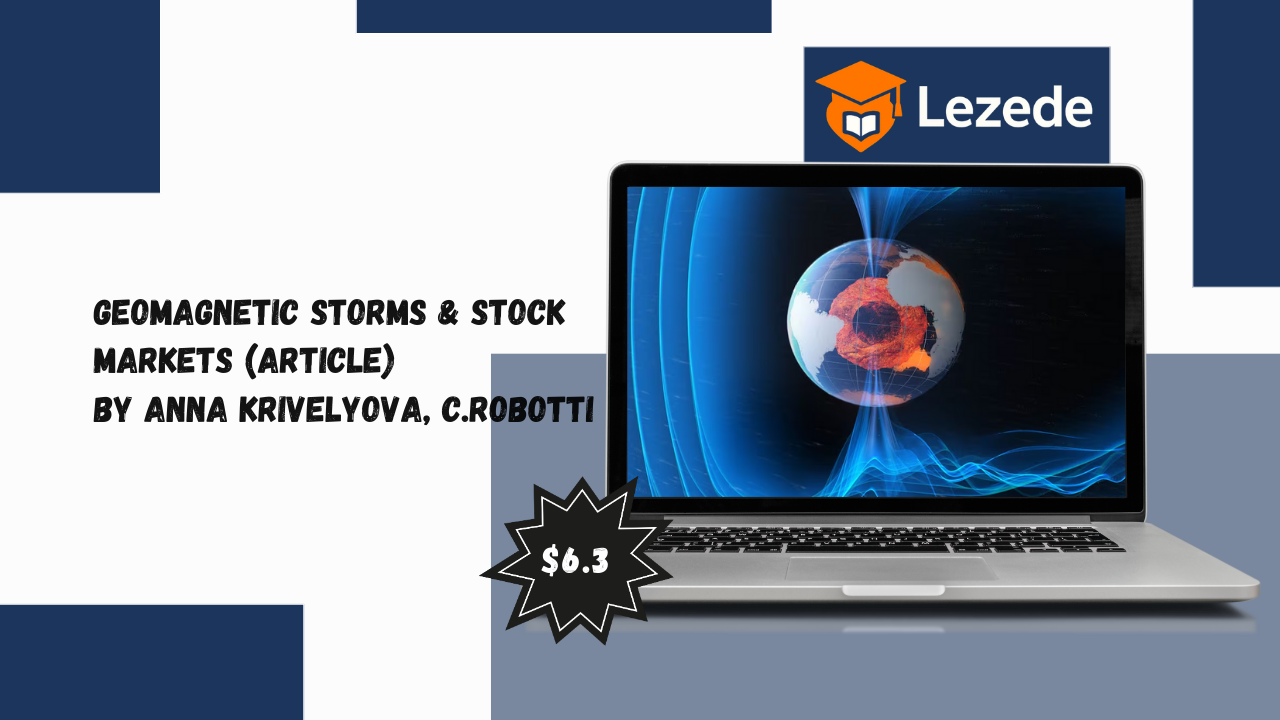
The study “Playing the Field: Geomagnetic Storms and the Stock Market” by Anna Krivelyova and Cesare Robotti offers a fascinating exploration of an unexpected connection between space weather and financial markets. It examines how geomagnetic storms—bursts of solar energy that can disturb satellites, communication systems, and even power grids—might also subtly affect stock performance. This relationship is not merely speculative; it’s supported by statistical evidence suggesting that shifts in human mood during such storms can impact investor behavior, leading to measurable market changes. In this analysis, we explore the science behind geomagnetic storms, their influence on human psychology, and the implications for stock market trends.
What Are Geomagnetic Storms?
Geomagnetic storms occur when streams of charged particles from the Sun, known as solar wind, collide with Earth’s magnetic field. While these interactions can create breathtaking auroras, they also generate strong magnetic fluctuations capable of disrupting infrastructure on the ground. Studying these storms requires looking at both their origins and their diverse effects across time and geography.
The Science Behind Geomagnetic Activity
Scientists classify geomagnetic storms based on their severity, from mild disturbances to powerful events that can cause serious technological disruptions. Key factors that determine storm intensity include solar wind speed, particle density, and the direction of the interplanetary magnetic field (IMF).
| Parameter | Impact on Storm Intensity |
|---|---|
| Solar Wind Speed | Faster winds tend to produce stronger storms |
| Solar Wind Density | Higher density increases magnetic fluctuations |
| Magnetic Field Orientation | A southward IMF alignment heightens storm severity |
When these factors align, the results can be dramatic—ranging from communication outages to mood alterations in humans.
How Geomagnetic Storms Affect Human Behavior
Krivelyova and Robotti’s main argument draws from psychology: strong geomagnetic activity can subtly dampen mood and optimism. This emotional shift can trigger “misattribution,” where investors interpret their own lowered mood as a signal of economic trouble, prompting risk-averse behaviors such as selling off stocks.
Much like gloomy weather can reduce enthusiasm for outdoor activities, a stormy space-weather environment may lead investors to shy away from the market. These emotional misreadings can cascade into broader market movements.
The Evidence Connecting Space Weather to Market Performance
The authors present robust data showing that heightened geomagnetic activity often precedes a decline in stock market returns, particularly in the week following a storm. This effect is not isolated to one market—it appears across several major indices.
| Stock Index | Observed Market Response |
|---|---|
| S&P 500 | Noticeable drop after storms |
| Dow Jones Industrial Average | Mirrors S&P 500 decline |
| NASDAQ | Significant negative returns |
This consistency across multiple markets suggests a widespread investor psychology shaped, at least in part, by geomagnetic events.
What It Means for Investors
If natural events can influence investor sentiment, there may be value in integrating space-weather monitoring into trading strategies. In theory, this could serve as an “emotional forecast,” helping traders recognize and counteract mood-driven decisions during periods of high geomagnetic activity.
Investors could use geomagnetic data as a secondary filter for timing buys and sells—though, as with any tool, it would complement rather than replace fundamental and technical analysis.
Final Thoughts
The relationship between geomagnetic storms and stock markets is an intriguing blend of astrophysics and behavioral finance. Krivelyova and Robotti’s work highlights how external, non-economic factors can still ripple through markets by shaping investor psychology.
These findings could influence how traders and analysts interpret short-term volatility, potentially adding cosmic data to the list of market indicators. In a future where financial models consider solar activity alongside earnings reports and economic trends, investors may find themselves watching both Wall Street and the solar wind forecast for clues about what’s next.