Free Download Handbook on the Knowledge Economy By David Rooney – Includes Verified Content:

Handbook on the Knowledge Economy By David Rooney Overview
Introduction to Handbook on the Knowledge Economy
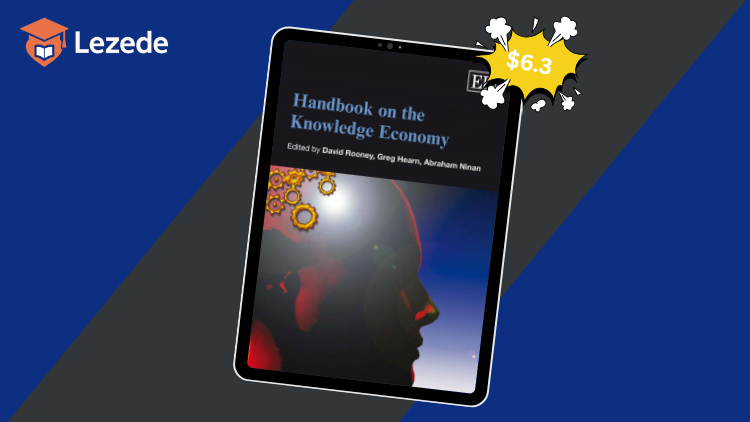
Handbook on the Knowledge Economy, edited by David Rooney, Greg Hearn, and Abraham Ninan, provides a comprehensive exploration of how knowledge drives social and economic development. This essential reference examines knowledge management, innovation, policy, and creative economies, offering practitioners and academics a structured framework to navigate the modern knowledge-based world.
Understanding the Knowledge Economy
The handbook defines the nature and structure of knowledge economies. Key concepts include:
-
Social, cooperative, cultural, and creative capital – the intangible assets that drive innovation and competitiveness
-
Intellectual and ethical capital – understanding how ideas, values, and ethics shape economic systems
-
Innovation and knowledge systems – mechanisms that convert knowledge into economic and social value
By explaining these elements, the handbook highlights the interconnectedness of knowledge, policy, and management practices in shaping contemporary economies.
Part I: Concepts – Building the Foundation
The first section focuses on conceptual frameworks essential for understanding the knowledge economy:
The Material, Mental, Historical, and Social Character of Knowledge
David Rooney and Ursula Schneider explore the multidimensional nature of knowledge, emphasizing how social and historical contexts shape its creation and application.
Wisdom, Ethics, and Postmodern Organizations
Bernard McKenna discusses ethical considerations in knowledge management, showing how wisdom and morality influence organizational decision-making.
Risk, Social Epistemology, and Knowledge Capital
Joost van Loon and Steve Fuller examine risk assessment, preserving knowledge integrity, and social capital, helping organizations minimize uncertainty while leveraging intellectual assets.
Part II: Policy – Knowledge in Action
The second section delves into knowledge policy and strategic management:
Cultural Capital and Creativity
Stuart Cunningham and Paul Jeffcutt explore how creativity and cultural resources enhance economic competitiveness.
Policy Analysis and Industrial Clusters
Phil Graham and Abraham Ninan provide frameworks to analyze policy decisions and manage clusters effectively, ensuring knowledge flows efficiently across organizations.
Intellectual Property Rights
Peter Drahos highlights the importance of protecting knowledge assets while enabling innovation, addressing the challenges of intellectual property in the modern economy.
Part III: Implementation – Applying Knowledge Strategically
The final section focuses on practical approaches to knowledge management:
Information Sharing and Collaboration
Donald M. Lamberton and Thomas Mandeville explain how collaborative networks and strategic information management create value in knowledge-based organizations.
Tacit vs. Explicit Knowledge
Ron Sanchez compares tacit and explicit knowledge approaches, offering guidance on translating intangible knowledge into actionable insights.
Managing Creativity and Productivity
Mark Banks, Greg Hearn, and Thomas Mandeville provide strategies to enhance creativity, leverage ICTs, and optimize productivity in knowledge-driven workplaces.
Digital Rights Management
Brian Fitzgerald and Jason Reid explore digital rights frameworks, essential for managing open-access knowledge and protecting digital intellectual assets.
Why This Handbook is Essential
-
Comprehensive coverage – from theory to policy and practical implementation
-
Interdisciplinary insights – contributions from experts in social sciences, innovation, and management
-
Practical relevance – actionable strategies for managers, policymakers, and academics
Who Should Read This Handbook
-
Knowledge management professionals
-
Innovation and policy strategists
-
Academics in social sciences, development studies, and business
-
Organizations seeking to enhance knowledge-driven productivity and creativity
Key Takeaways
By reading Handbook on the Knowledge Economy, readers will:
-
Understand the critical role of knowledge in modern economies
-
Learn to manage intellectual, cultural, and creative capital effectively
-
Apply policy and management strategies to maximize innovation and productivity
-
Gain insights into emerging challenges such as ethics, tacit knowledge, and digital rights
Conclusion
Handbook on the Knowledge Economy is a definitive guide for understanding how knowledge shapes modern society and economies. Edited by David Rooney and collaborators, it combines analytical rigor with practical guidance, offering a must-have resource for practitioners, policymakers, and academics seeking to leverage knowledge as a strategic asset.