Free Download the Professional Trading Masterclass 2.0 – PTM 2.0 By Anton Kreil – Includes Verified Content:
The Most Complete Professional Trading Process for the U.S. Stock Market
Professional Trading Masterclass 2.0 (PTM 2.0) is the flagship program of the Institute of Trading and Portfolio Management (ITPM), taught by former Goldman Sachs trader Anton Kreil.
The course has been fully updated and remastered (2021), with the content doubled in size, and is designed to give retail traders access to a full, institutional-grade systematic process for trading and investing in the U.S. stock market.
If you want more than “patterns and indicators” and instead want to learn how professional portfolio managers actually think, structure portfolios, and generate trade ideas, PTM 2.0 is built for exactly that.
Important: Trading and investing always involve real financial risk. This program is for educational purposes only and does not guarantee profits or future results. Live trading accounts are typically for adults only.
What Makes PTM 2.0 Different?
PTM 2.0 is not a quick trading course. It’s a full framework that covers:
-
Global macro and leading indicators
-
Fundamental and quantitative processing for trade idea generation
-
Long/short portfolio construction and risk management
-
Technical analysis and price action as part of a broader process
-
Trading psychology, preventative risk management (PRM), and risk/reward management (RRM)
-
Performance statistics, track record building, and treating trading as a business
With over 40 in-depth video lectures (many running over an hour each) plus spreadsheet classes and an exam, PTM 2.0 is structured to train you to think like a professional, not a hobbyist.
Core Learning Outcomes
By the end of PTM 2.0, you will understand how to:
-
Build a systematic long/short equity process focused on U.S. stocks
-
Use macro and leading indicators to understand where we are in the economic cycle
-
Generate quantitative and qualitative trade ideas using a repeatable template
-
Construct, size, and rebalance a professional long/short portfolio
-
Manage risk proactively through PRM and RRM concepts
-
Use technical analysis and price action to refine entries and exits within a fundamentally driven framework
-
Track your results with proper performance statistics and a professional-style track record
This is about building a complete trading business model, not just individual trades.
Course Structure – From Macro Framework to Trade Execution
PTM 2.0 is broken into clear thematic sections that build on each other.
The Framework & Field of Play (Videos 1–2)
You begin with:
-
Video 1 – The Framework
A 1h45 deep-dive into how professionals structure their entire approach to markets. -
Video 2 – The Field of Play
Understanding the U.S. equity market landscape, instruments, and where you, as a trader, “sit” in the ecosystem.
These videos set the mental and structural foundation for everything that follows.
Macro & Leading Indicators (Videos 3–15)
The next block is an extensive, professional-level education in macro and leading indicators:
-
Gross Domestic Product (GDP) and the economic cycle
-
Leading indicators 1–10 (Videos 4–14)
-
Spreadsheet class for indicator processing (Video 6)
-
Recap & integration (Video 15)
You learn how to:
-
Interpret macro data before it hits corporate earnings
-
Understand where we are in the cycle (expansion, slowdown, recession, recovery)
-
Build a systematic view that drives your trade ideas instead of reacting to news
This is the kind of macro training typically used at asset managers and hedge funds.
Foundations of Long/Short Portfolio Management (Videos 16–21)
Next, PTM 2.0 shows you how professionals actually build and manage portfolios:
-
Long/Short Portfolio Management 1a–4 (Videos 16–20)
-
Position sizing
-
Gross and net exposure
-
Sector and factor exposure
-
Risk concentration and diversification
-
Spreadsheet-based portfolio modelling
-
-
Portfolio Management Recap (Video 21)
Here, you move from “single-stock trading” to thinking like a portfolio manager working with overall risk, exposure, and balance across multiple ideas.
Trade Idea Generation – Quantitative & Qualitative (Videos 22–37)
This is the heart of PTM 2.0: how to consistently generate, evaluate, and refine trade ideas.
Quantitative Processing (Videos 22–29)
You learn how to:
-
Build and process screeners and filters
-
Use spreadsheets and data to rank and prioritize ideas
-
Identify statistically interesting stocks from a large universe
-
Run multiple stages of quantitative filtering
Several sessions are spreadsheet classes designed to make this workflow concrete and repeatable.
Qualitative Processing & Catalysts (Videos 30–35)
Then you add the human, analytical layer:
-
Qualitative Processing 1–2 – reading companies, industries, and narratives
-
Identifying catalysts – events that can unlock value or drive re-pricing
-
Creating a Trade Idea Generation Template
-
Macro-driven trade ideas
-
Generating international trade ideas via U.S.-listed ADRs
You learn not just what to buy or short, but why, and what you’re waiting for.
Technical Analysis & Price Action (Videos 36–37)
Finally, the course integrates technical analysis as the last piece of confirmation, not the entire system:
-
Trade Idea Generation – Technical Analysis
-
Trade Idea Generation – Price Action
You see how technical tools and price behavior are used to:
-
Fine-tune entries and exits
-
Validate or time fundamentally driven ideas
-
Manage risk on individual trades within the larger portfolio framework
Trading Psychology & Preventative Risk Management (Videos 38–40)
No professional process is complete without psychology and risk control:
-
Trading Psychology & Preventative Risk Management (PRM) 1–2
-
Emotional pitfalls
-
Behavioural biases
-
Preventative risk structures and guardrails
-
Spreadsheet-based PRM planning
-
-
Trading Psychology, Eliminating Emotion & Staying Objective (PRM & RRM)
-
Separation of PRM (before the trade) and RRM (during and after the trade)
-
Concrete techniques to keep execution aligned with the plan
-
This section is about staying systematic when markets and emotions push you to behave irrationally.
Trading as a Business – Statistics, Track Record & Next Steps (Videos 41–43 + Exam)
The final part of PTM 2.0 focuses on turning you from “someone who trades” into someone who runs a trading business:
-
Trading as a Business – Performance Statistics & Track Record 1–2
-
Understanding drawdowns, volatility, hit rate, expectancy
-
Building a professional track record using spreadsheets
-
Knowing what institutions and serious investors look for
-
-
Getting Organized and Next Steps
-
How to implement the PTM process
-
How to structure your day, week, and month
-
How to keep improving systematically
-
Finally, there is a PTM Exam to test your understanding of the full process.
Who Is PTM 2.0 For?
PTM 2.0 is best suited for:
-
Intermediate to advanced traders who want institutional-level structure
-
Serious beginners willing to invest the time to learn a full end-to-end process
-
Traders who want to move from “pattern trading” into long/short portfolio management
-
Individuals interested in trading U.S. equities like a professional
This program is long, intensive, and detailed. It is not a “quick fix” course, but a full professional framework.
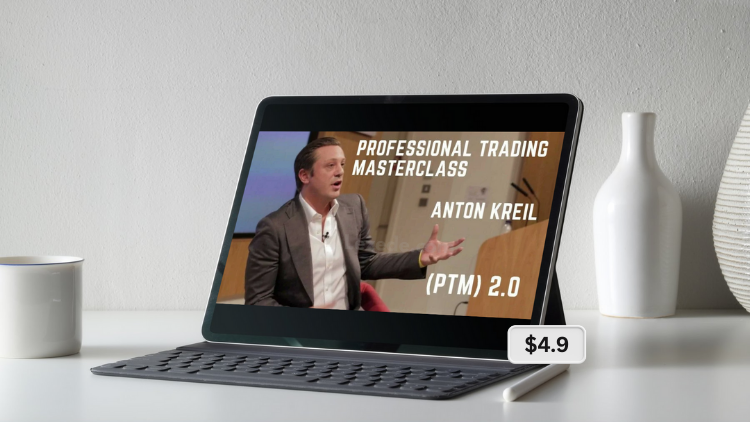
About Anton Kreil
Anton Kreil is a former professional trader who worked at:
-
Goldman Sachs
-
Lehman Brothers
-
JP Morgan
He is the Managing Partner at the Institute of Trading and Portfolio Management (ITPM) and is known for his emphasis on:
-
Systematic thinking
-
Professional risk management
-
Treating trading as a business, not a hobby
PTM 2.0 condenses his institutional experience into a structured program accessible to the serious retail trader.
Final Thoughts – Is PTM 2.0 Right for You?
Choose Professional Trading Masterclass 2.0 if you are:
-
Ready to commit to dozens of hours of structured content
-
Looking for a complete, professional trading process, not just “signals”
-
Interested in building long/short portfolios and macro-linked equity strategies
-
Serious about developing a track record and business mindset around trading
If you treat the course as a long-term educational investment—taking notes, building spreadsheets, and gradually implementing the framework—PTM 2.0 can serve as the core foundation of a professional-style trading approach focused on the U.S. stock market.