
Free Download Stock Market Science and Technique by Richard Wyckoff Course – Includes Verified Content:
Stock Market Science and Technique by Richard Wyckoff Course Overview
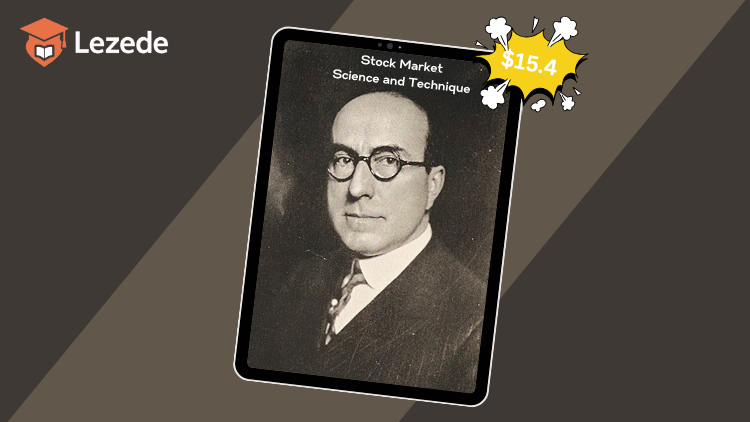
Stock Market Science and Technique by Richard Wyckoff Course
The Richard Wyckoff Course – Stock Market Science and Technique is considered one of the most comprehensive trading courses ever created. First published in 1931, it remains highly relevant today thanks to its timeless principles on price, volume, and the law of supply and demand.
Richard D. Wyckoff was not just an ordinary trader—he was a pioneer. Through his detailed study of market movements and the psychology of traders, he developed a method that still forms the foundation of modern technical analysis. His insights into price–volume relationships, chart interpretation, and market behavior have helped generations of traders achieve consistent profits.
The Legacy of Richard Wyckoff
Richard D. Wyckoff was active during the early 20th century, a time dominated by legendary traders such as Harriman, Keane, and Morgan. He carefully observed these market giants, extracting strategies and codifying them into what became the Wyckoff Method.
At the heart of his approach is the relationship between price and volume. Wyckoff demonstrated how these two elements reveal the forces of supply and demand at work, helping traders anticipate future price movements. He also introduced the concept of the “Composite Man”—a fictional trader representing the combined actions of major market participants. By analyzing the market through the lens of the Composite Man, traders can better understand institutional behavior and market manipulation.
Wyckoff’s system goes far beyond technical analysis; it provides a framework for reading the market like a professional. This is why, nearly a century later, his strategies are still applied by hedge funds, mutual funds, and professional traders around the world.
Why the Wyckoff Method Still Matters Today
Although the original course was written in 1931, its principles remain timeless. The financial landscape has evolved, with hedge funds and pension funds replacing the individual giants of Wyckoff’s era, but market psychology has not changed. Fear, greed, and the law of supply and demand continue to drive price action.
Some of Wyckoff’s key contributions include:
-
Price–Volume Analysis: Identifying market trends and turning points through the study of trading activity.
-
Chart Interpretation: Using vertical line charts and figure charts to visualize market dynamics.
-
Phases of Market Movements: Accumulation, markup, distribution, and markdown cycles.
-
Trading Psychology: Understanding the Composite Man and institutional behavior.
-
Unique Market Phrases: Evans, Wyckoff’s student, later popularized terms such as “jumping the creek” and “falling through the ice,” making complex strategies easier to grasp.
These tools and principles help traders distinguish between short-term pullbacks and major trend reversals, allowing them to position themselves strategically for consistent gains.
Course Structure and Content
The Stock Market Science and Technique course is divided into several structured units, each designed to build your knowledge progressively.
Unit 1 – Technical Trading Techniques Workshop
-
One comprehensive volume with supporting exhibits.
-
Three lessons, including two detailed exams and one practice test.
-
A trading exercise to apply concepts in real-world situations.
Unit 2 – Richard D. Wyckoff Text: Stock Market Science and Technique
-
Three-volume text covering the full Wyckoff methodology.
-
Twenty-five lesson exams to reinforce learning and ensure deep comprehension.
Unit 3 – SMI Basic Lectures
-
Twelve recorded lectures (originally on cassette, now available on MP3).
-
Focuses on core principles of Wyckoff analysis.
-
Twelve exams designed to test understanding of these lectures.
Unit 4 – Final Exam
-
A comprehensive review covering text material, exams, lectures, and supplementary content.
-
Ensures mastery of Wyckoff’s concepts and readiness for application in live trading.
The Wyckoff Principles Expanded by Robert Evans
In the 1950s and 1960s, Robert Evans, a student of Wyckoff, carried the torch by expanding upon the original principles. He established The Stock Market Institute, where he taught Wyckoff’s strategies in a simplified, engaging manner.
Evans introduced memorable metaphors like “jumping the creek” (a breakout from resistance) and “falling through the ice” (a breakdown through support), which made the Wyckoff method even more accessible. These vivid analogies continue to be used by modern traders when applying Wyckoff analysis.
Who Should Take This Course?
The Wyckoff course is designed for traders and investors at all levels:
-
Beginners who want a strong foundation in technical analysis.
-
Intermediate traders looking to refine their strategies with time-tested methods.
-
Advanced professionals seeking a deeper understanding of market behavior and institutional trading psychology.
-
Investors who want to apply a systematic, disciplined approach to portfolio management.
Conclusion: A Timeless Guide to Trading Success
The Stock Market Science and Technique by Richard Wyckoff Course is more than just a trading program—it’s a complete education in market behavior and trading psychology. By focusing on price, volume, and supply-demand dynamics, Wyckoff created a framework that remains just as powerful today as it was nearly 100 years ago.
Whether you’re a beginner or a seasoned trader, this course offers insights that can help you achieve consistent profits and trade with the mindset of professionals. The combination of history, practical lessons, and detailed exams ensures that you not only learn the concepts but also develop the discipline to apply them effectively.
If you’re serious about trading, studying Wyckoff’s principles is a step toward mastering the science and technique of the stock market.