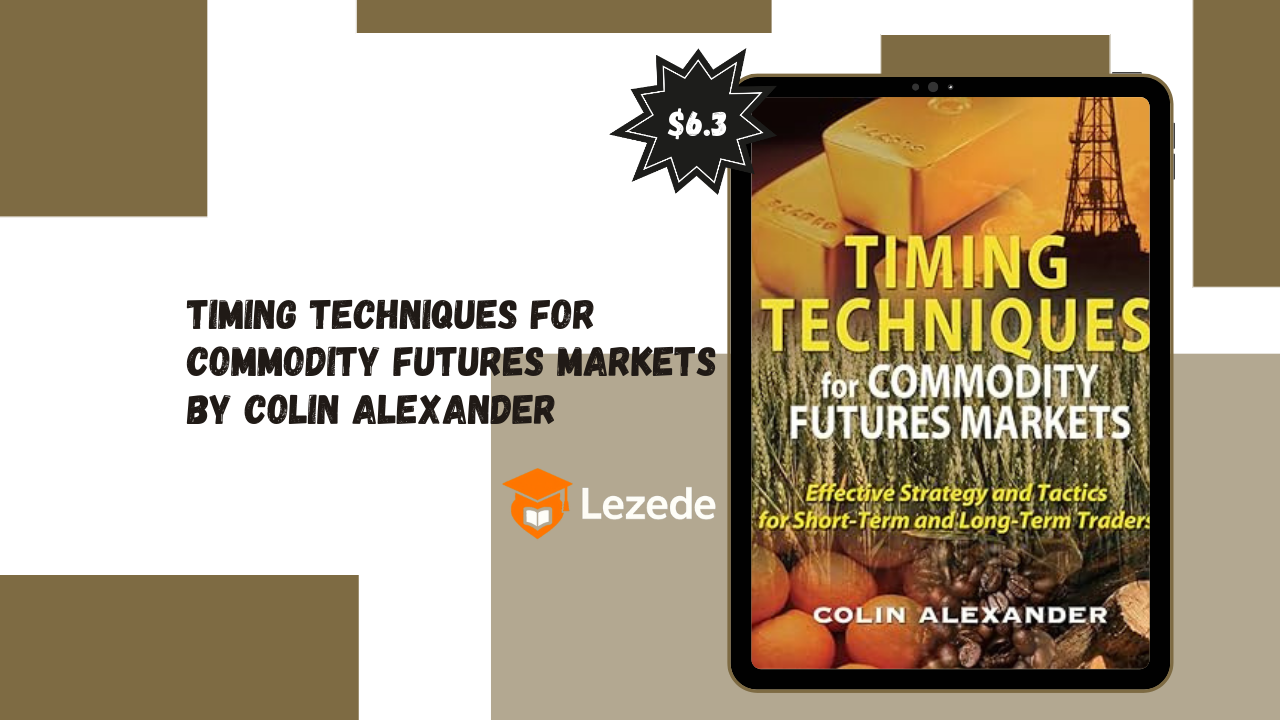
Timing Techniques for Commodity Futures Markets By Colin Alexander – Digital Download!
Introduction to Timing Techniques for Commodity Futures Markets by Colin Alexander
Commodity markets have long played a critical role in the global economy, influencing everything from the price of energy and food to the cost of raw materials used in manufacturing. Traders, investors, and producers alike participate in these markets to hedge risk, speculate on price movements, and discover fair value. Yet because commodities are subject to powerful cycles, seasonal shifts, and geopolitical forces, successfully trading them can be challenging without a clear method of timing entries and exits.
“Timing Techniques for Commodity Futures Markets” by Colin Alexander is a course specifically designed to address this challenge. It provides traders with a structured set of tools to analyze price action, recognize key market cycles, and execute trades at optimal points. Rather than relying on hunches or purely fundamental analysis, this program teaches participants how to use technical timing strategies to gain a decisive edge.
Why Timing Matters in Commodity Futures
In futures markets, leverage magnifies both profits and losses. A small price movement can result in significant gains—or significant drawdowns—if the timing of a trade is off. Unlike long-term investing in stocks or bonds, futures trading demands precision in both entry and exit. Seasonal patterns, weather events, supply disruptions, and shifts in demand can cause rapid price swings.
This is why timing techniques are vital. By studying recurring patterns, cycles, and indicator signals, traders can improve their probability of entering a trade just as a move begins and exiting before it reverses. Colin Alexander’s course brings together decades of research and trading experience to present these techniques in a clear, applicable way.
About the Author
Colin Alexander is a seasoned market analyst and trader who has focused on commodity futures for much of his career. Known for blending cycle analysis with classical charting, Alexander has written extensively on how traders can use timing tools to align their trades with market rhythms. In “Timing Techniques for Commodity Futures Markets,” he distills his knowledge into a comprehensive training resource suitable for both new and experienced market participants.
What the Course Covers
The material is organized to build a complete understanding of timing from the ground up. Students begin with the basics of commodity futures and gradually move into more advanced timing models. Key areas include:
-
Foundations of Commodity Futures Trading
-
How futures contracts work, margin requirements, and leverage.
-
Differences between commodities such as agricultural products, energy, and metals.
-
Understanding supply and demand drivers unique to each market.
-
-
Cycle Analysis and Market Rhythms
-
Identifying long-term and short-term commodity cycles.
-
Using seasonal tendencies to anticipate turning points.
-
Combining fundamental events with cyclical analysis for better accuracy.
-
-
Technical Timing Indicators
-
Moving averages, momentum oscillators, and trendlines for entry/exit signals.
-
Price patterns such as breakouts, consolidations, and reversals.
-
Volume and open interest as confirmation tools.
-
-
Integrating Timing with Risk Management
-
Position sizing and stop-loss placement based on volatility.
-
Managing multiple trades and avoiding overexposure.
-
How to build a trading plan that includes timing rules and money management.
-
-
Real-World Examples and Case Studies
-
Step-by-step analysis of historical commodity trades.
-
Learning from both winning and losing positions.
-
Adapting timing techniques to current market conditions.
-
By following this progression, students gain not just theoretical knowledge but a practical framework they can apply immediately.
Practical Benefits of the Course
After completing “Timing Techniques for Commodity Futures Markets,” participants will be able to:
-
Recognize recurring cycles and seasonal patterns in key commodity markets.
-
Apply technical timing indicators to identify high-probability trades.
-
Plan entries and exits with greater precision to improve risk-reward ratios.
-
Combine timing analysis with solid money management principles.
-
Develop a disciplined, repeatable trading process to reduce emotional decision-making.
In short, this course aims to transform how you approach commodity futures by giving you tools to anticipate market moves rather than simply react to them.
Who Should Take This Course
This program is ideal for:
-
Individual traders who want to improve their success rate in commodities.
-
Futures brokers and advisors looking to offer clients better analysis.
-
Investors and hedgers who need to time purchases or sales of physical commodities.
-
Students of finance interested in learning how technical and cyclical analysis applies to futures markets.
Whether you are a novice trying to understand the basics or a seasoned trader looking to refine your timing skills, the course offers actionable insights.
Why This Course Stands Out
Many resources on commodity futures focus primarily on fundamental analysis—tracking supply reports, weather data, and geopolitical events. While fundamentals are important, they often lag actual price movements. Colin Alexander’s course is distinctive because it focuses on timing—how and when to act based on observable market behavior.
Additionally, the course emphasizes practicality. Concepts are illustrated with charts, historical examples, and clear step-by-step processes. This makes it easier for learners to translate theory into action. Instead of overwhelming students with dozens of indicators, Alexander highlights those with proven effectiveness in commodity markets.
Preparing for Today’s Commodity Markets
In recent years, commodity markets have experienced heightened volatility due to factors such as global supply chain disruptions, geopolitical tensions, and shifts toward renewable energy. For traders, this environment means both risk and opportunity. Having a set of timing techniques is more valuable than ever.
The frameworks taught in “Timing Techniques for Commodity Futures Markets” are adaptable. Whether you’re trading crude oil, gold, soybeans, or copper, the same principles of cycles, technical signals, and disciplined execution can help you navigate uncertain conditions.
Conclusion
“Timing Techniques for Commodity Futures Markets” by Colin Alexander is a comprehensive course that equips traders and investors with the tools to enter and exit commodity futures positions more effectively. By combining cycle analysis, technical indicators, and sound risk management, the course provides a structured approach to trading markets where timing is everything.
For anyone serious about improving their performance in commodities—whether for speculation, hedging, or investment diversification—this program offers a clear path forward. In a sector where prices can swing dramatically on a single report or weather event, Colin Alexander’s timing techniques give you the knowledge and confidence to act decisively and strategically.