Trading Option Greeks By Dan Passarelli – Digital Download!
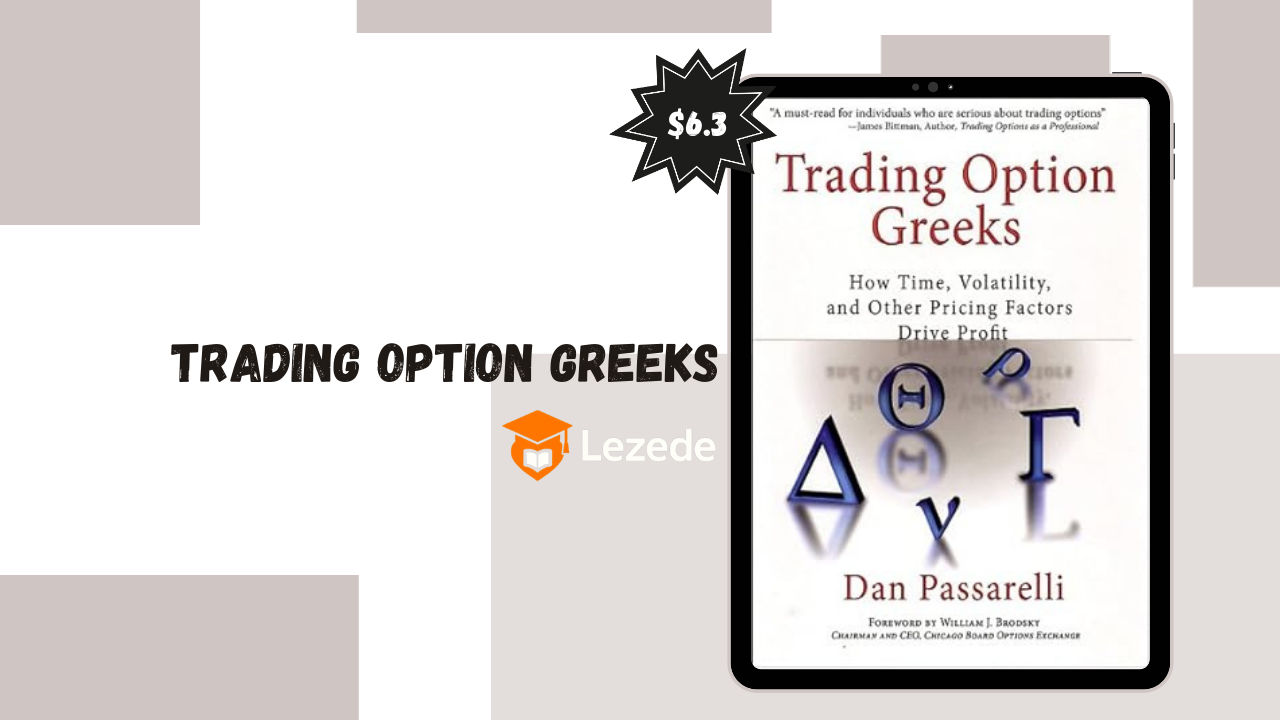
Introduction to Trading Option Greeks by Dan Passarelli
In the fast-paced world of options trading, success depends on more than just predicting market direction. To thrive, traders must understand the hidden forces that shape option prices — time decay, volatility shifts, and the sensitivity of premiums to underlying asset movements. These forces, known collectively as the “Greeks,” are the essential risk-management tools of the options market. Without mastering them, even seasoned traders can struggle to manage positions effectively or misinterpret their true exposure. That is precisely why “Trading Option Greeks” by Dan Passarelli has become a go-to resource for retail traders, institutional investors, and risk managers alike.
This comprehensive course takes a deep dive into the Greeks — Delta, Gamma, Theta, Vega, and Rho — explaining not just what they are, but how to apply them in real-world trading strategies. By translating complex concepts into clear, actionable insights, Passarelli provides a roadmap for controlling risk, optimizing returns, and making informed decisions in any market environment.
Why Understanding the Greeks Matters
Options are unique financial instruments because their prices are affected by multiple variables, not simply the price of the underlying stock or index. An option’s value changes with movements in the underlying asset, shifts in volatility, time to expiration, and even interest rates. Each of these factors can push and pull on an option premium in ways that are often counterintuitive for beginners.
The Greeks quantify these sensitivities. For example:
-
Delta measures how much an option’s price is expected to change for each one-point move in the underlying asset.
-
Gamma tracks how fast Delta itself changes, revealing the acceleration of risk exposure.
-
Theta represents time decay — how much value an option loses each day as expiration approaches.
-
Vega captures the sensitivity to changes in implied volatility.
-
Rho indicates how interest rate changes can influence option pricing.
When combined, these metrics give traders a 360-degree view of their positions, helping them answer critical questions: How much will my option lose if volatility drops? How quickly will time decay erode its value? What happens to my Delta if the underlying price spikes?
By mastering these concepts through Passarelli’s course, traders learn to anticipate how their positions behave under various market conditions, rather than reacting to surprises after the fact.
About the Course and Author
Dan Passarelli is a veteran options trader and educator with years of experience on the trading floors of the Chicago Board Options Exchange (CBOE) and other major derivatives markets. Known for his clear, practical teaching style, he has helped thousands of traders and financial professionals understand complex options concepts through seminars, books, and online education programs.
In “Trading Option Greeks,” Passarelli distills his expertise into a structured learning experience designed for traders at multiple skill levels. Beginners gain a firm grasp of the Greeks and their mechanics, while more advanced traders discover sophisticated applications — such as using the Greeks for portfolio hedging, constructing neutral strategies, and fine-tuning spreads.
This dual focus on fundamentals and advanced techniques makes the course a powerful resource for anyone who wants to move beyond basic calls and puts toward a professional-level understanding of options.
What You’ll Learn
The course starts with an accessible overview of option pricing theory, showing how the Greeks are derived from the Black-Scholes and binomial models. Passarelli then moves into practical applications, demonstrating how each Greek affects both individual options and multi-leg strategies.
Key learning outcomes include:
-
Understanding Individual Greeks
-
How Delta, Gamma, Theta, Vega, and Rho are calculated.
-
Interpreting each Greek for calls, puts, and spreads.
-
Recognizing how the Greeks interact with each other as market conditions change.
-
-
Managing Risk with the Greeks
-
Using Delta to gauge directional exposure.
-
Employing Gamma to anticipate changes in Delta and adjust hedges.
-
Monitoring Theta to minimize the impact of time decay on long positions.
-
Leveraging Vega to benefit from volatility changes or protect against volatility crushes.
-
-
Strategy Design and Adjustment
-
Constructing trades (like verticals, iron condors, and butterflies) based on Greek profiles.
-
Adjusting existing positions dynamically as Greeks shift.
-
Understanding portfolio-level Greeks for multi-position management.
-
-
Real-World Examples and Case Studies
-
Analyzing live market scenarios.
-
Learning how professionals on the trading floor monitor and balance their Greeks throughout the day.
-
By the end of the course, students will not just memorize definitions but will be able to use the Greeks as a practical decision-making framework — a major step toward consistent profitability in options trading.
Who Should Take This Course?
The course is ideal for:
-
Retail traders who already understand basic options (calls and puts) and want to advance to the next level.
-
Financial professionals such as advisors, portfolio managers, or risk managers who incorporate options into client accounts.
-
Active investors looking to hedge equity positions or generate income with high confidence.
-
Students of finance or quantitative fields interested in the practical side of derivatives.
Even experienced traders can benefit from a refresher on how the Greeks interact in fast-changing markets — knowledge that can prevent costly mistakes during volatile periods.
Why This Course Stands Out
While many options courses teach strategies by name (covered calls, straddles, condors), few focus on the “why” behind strategy performance. Passarelli flips this approach: by understanding the Greeks first, traders can build or modify any strategy to suit market conditions instead of relying on cookie-cutter setups.
This emphasis on risk analysis and adaptability is what makes the course stand out. By the end, students have the confidence to:
-
Evaluate trades based on underlying risk factors rather than just payoff diagrams.
-
Adjust positions proactively rather than reactively.
-
Interpret option chains and implied volatility with a professional eye.
Ultimately, this leads to a much deeper command of options trading and a stronger foundation for long-term success.
Practical Benefits
Armed with the knowledge from “Trading Option Greeks,” traders can:
-
Hedge directional exposure more precisely using Delta and Gamma.
-
Identify when time decay works for or against them.
-
Position portfolios to profit from volatility expansion or contraction.
-
Avoid overpaying for options by recognizing how changing variables impact pricing.
-
Gain a competitive edge by understanding how market makers manage risk.
These benefits are not theoretical. They translate directly into improved decision-making and more consistent performance, whether you trade single stocks, indexes, or complex multi-leg spreads.
Conclusion
“Trading Option Greeks” by Dan Passarelli is more than just a course on options trading; it’s a framework for thinking like a professional. By demystifying the Greeks and showing how to apply them in real trading scenarios, Passarelli gives students the tools to manage risk, optimize strategies, and respond intelligently to market changes.
For traders who want to move beyond guessing and into structured, data-driven decision-making, this course is an invaluable resource. Whether you’re a self-directed investor or a financial professional, mastering the Greeks is a critical step on the path to consistent options trading success.